7.4 (Q1)
CiteScore2024
Q2
Web of Science
Volume & Issue: Volume 7, Issue 1, January 2023, Pages 1-105 
Number of Articles: 7

Cytotoxicity and Anticancer Effect of Chitosan-Ag NPs-Doxorubicin-Folic Acid Conjugate on Lungs Cell Line

Pages 1-14

https://doi.org/10.22034/chemm.2023.359769.1604

Manar S. Jabar, Shatha Abdul Wadood Al- Shammaree

Abstract This study looked at how the synthetic chitosan-AgNPs-Doxorubicin-folic acid combination affected the A549 cell line in terms of cytotoxicity and anticancer activity. By reducing silver nitrate (AgNO3) and biodegradable chitosan, silver nanoparticles were biosynthesized. The produced conjugate was examined by using FT-IR spectroscopy, atomic force microscopy (AFM), and field emission scanning electron microscopy (FE-SEM). The cytotoxicity assay for the viability of A549 cells revealed that the combination of chitosan, AgNPs, doxorubicin, and folic acid decrease cell viability in a dose-determined bymethod over 48 hours, which direct to a dependent reduce in the activity of A549 cells. The mechanism analysis of the impacted living cells leading to apoptosis revealed a considerable rise in nuclear concentration, cytochrome c, and cell membrane permeability (dose-dependent). The bright green chromatin in DOX-treated cells was compacted or broken up, indicating an early stage of apoptosis. However, cells treated with the CS-AgNPs-DOX-FA compound displayed orange nuclei and late stage apoptosis. The findings demonstrated that A549 lung cancer cells are cytotoxic to Cs-Ag NPs-DOX-FA. The Cs-Ag NPs-DOX-FA MTT assay demonstrated that the harmful effect of 25 µg/mL on A549 cells is dose-dependent, and a rise in nuclear intensity, membrane permeability, and cytochrome were observed. Cell viability also declined, and the potential of the mitochondrial membrane changed. The fact that the release of DOX was delayed shows that nanoparticles in drug carriers may be used to reduce the exposure of healthy tissues; however, boosting the accumulation to therapeutic medicine in the tumour site.

Green Synthesis of Gold Nanoparticles using Extract of Vitis vinifera, Buchananialanzan, Juglandaceae, Phoenix Dactylifera Plants, and Evaluation of Antimicrobial Activity

Pages 15-27

https://doi.org/10.22034/chemm.2023.355289.1597

Nilam Arunkumar Patil, Somnath Udgire, D. R. Shinde, Prakash D. Patil

Abstract The establishment of nanotechnology, nanoparticles from gold (Au-NPs) is one of the extensive attention due to its essential properties. In this study, the green synthesis of gold NPs from the extract of Raisins, Charoli (Buchananialanzan), Walnut (Juglandaceae), and Black dates (Phoenix dactylifera) plants is reported. While all the (bark)show FCC face-centered cube structure as FCC as permitted reflection is (111), (200), (220), (311), the gold particles either show the cubic structure or face center cubic structure. The FT-IR spectra show the presence of natural products with functional groups hydroxyl, amine, amide, acid, and ester, respectively. The antimicrobial activity shows that the NPD3 shows well to moderate antimicrobial activity with S. aureus, E. coli, B. subtilis, and P. aeruginosa organisms. The NPD3 at 50 mg/mL concentration shows the 12mm, 11mm, 14m, and 14mm zone of inhibition.

Investigating the Use of Chemicals in Sustainable Architecture to Save Energy

Pages 28-52

https://doi.org/10.22034/chemm.2023.354436.1586

Golnaz Farjadian, Atieh Mollaahmadi

Abstract The purpose of using chemical additives is to improve one or more properties in fresh or hardened concrete. Some chemical admixtures are used to improve one property; meanwhile others affect several properties of concrete. On the other hand, some chemical additives affect the properties of fresh concrete, while others are used to improve the properties of hardened concrete. The goal of this article is energy savings in sustainable architecture. According to the forecast of scientists and the IAEA, the demand for energy consumption and production in the future will also increase rapid and worrying. So, from year 1 to 2, the global demand for electricity increased by 2 % to 2 tra-wat and by 2 % to 2 tra-wat. According to the scientists' studies, by year 3, wind power supplies the world's electricity. The principle of resource saving, on the one hand, deals with the proper use of non-renewable resources and energies, such as fossil fuels to reduce consumption, and on the other hand, the control and use of natural resources as renewable and durable reserves is paying serious attention. You can save energy by using new solutions and intelligent building. One of the most commonly used ways of a high-powered energy is the utilization of photovoltaic systems in architecture, including the combination of this system with a building as a photovoltaic building.

A Pioneered Homemade NAG-4SX3-3D Analyzer Coupled with Continuous Flow Injection Analysis New Approach for the On-Line Turbidimetric Measurements of Metronidazole in Pure and Pharmaceutical Formulations

Pages 53-66

https://doi.org/10.22034/chemm.2023.356013.1592

Nagham Shakir Turkie, Sarah Faris Hameed

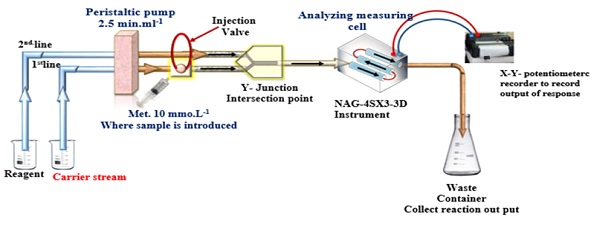
Abstract The detection of metronidazole (MTZ) in pure and pharmaceutical formulations is now possible with a newly developed analytical technique based on turbidimetric measurement (from 0 to 180 degrees) utilizing a NAG-4SX3-3D analyzer. The technique relied on the fact that phosphotungstic acid and metronidazole would precipitate white in an acidic medium, indicating the presence of an ion pair molecule. In order to measure turbidity, we used the attenuation of light after it collided with precipitated particles on surfaces with angles ranging from 0 to 180 degrees. We looked into both chemical and physical parameters. With a linear dynamic from 0.05 to 20 mmol.L-1, metronidazole has a correlation coefficient value ® of 0.9993. From the step-wise dilution for the least concentration in the linear dynamic range of the calibration graph with an RSD percent lower than 0.5 percent, we find that the detection limit for 3, 35 mmol.L-1 (n = 8) metronidazole is 29.953 ng/sample. Four medicinal items have been successfully identified using this method. Standard addition and a t-test were used to compare the newly developed method of analysis to the tried-and-true methods (the HANNA equipment for turbidity measurement and the UV-spectrophotometric method). The researchers found no significant difference between the three methods at the 95% confidence level.

Examination of Four Antiviral Drugs by Studying Their Polynomials and Topological Indices

Pages 67-80

https://doi.org/10.22034/chemm.2023.347619.1571

Setareh Javame, Masoud Ghods

Abstract To fight against viral diseases, in addition to prevent the spread of the disease, it is necessary to discover suitable antiviral agents to save as many lives as possible. Therefore, it seems important to develop new and effective vaccines. An efficient way to find effective drugs or vaccines is to answer whether they effectively treat the viral disease of interest. In this article, M-polynomial, NM-polynomial, and some topological indices are investigated for Lopinavir, Azithromycin, Favipiravir, and Oseltamivir, which are considered as the efficient COVID-19 antiviral drugs, and they can be used as a guide to discover more efficient drugs to battle against COVID-19. Also, in addition to calculate the topological indices, M-polynomial and NM-polynomial were plotted and compared as well as they were used to calculate the topological indices.

Metal Complexes of Metronidazole Benzoate with Some Metal Ions: Synthesis and Characterization and Study Apart from Their Biological Applications

Pages 81-91

https://doi.org/10.22034/chemm.2023.357626.1598

Waleed Alaa Aldeen Saleh, Nada Mutter Abbass

Abstract New metal complexes of metronidazole benzoate were prepared by the reacting of Cd(NO3)2, MnCl2.6H2O and ZrCl4 with ligands in L:M (1:1) mole ratio. All synthesized complexes were analyzed by FT-IR, UV-Vis, TG, DTG, AAS, 1H-NMR, elemental analysis (CHN), melting point determination, magnetic susceptibility determination, and chloride content determination. The proposed shape of all complexes was the octahedral. Some complexes were electrolyte and paramagnetic. All synthesized complexes are activated as antibacterial and antifungal against (Candida, Pseudomonas auroginosa (G-), Escherichia coli (G-), Bacillus (G+), and Staphylococcus aureus (G+)). The antioxidant activity of the ligand was also tested.

Indirect Sensitive Determination of Oxymetazoline. HCl in Pure Pharmaceutical Drugs and Biological Samples Using a Modified Sensor Unit Via a Green Method of FI/MZ System

Pages 92-105

https://doi.org/10.22034/chemm.2023.361846.1607

Shahad L. Hamed, Bushra B. Qassim

Abstract A new FI method was examined with many advantages such as simplicity, high sensitivity and accuracy, economical in terms of material consumption, environmentally friendly, and less hazardous to laboratory with the minimum volume of reactants. Flow injection analysis is a process employ for estimation of Oxymetazoline hydrochloride in pharmaceutical forms by spectrophotometric with merging zone technology. This method depends on the oxidation-reduction reaction a cross the oxidizing agent the drug while reducing it to iron(II). The reduced form reacts with the reagent 2,2`-bipyridyl to give a pink complex is measured at λmax (521) nm. Linear calibration curve obeyed Beer's law 10-500 μg.mL-1 with detection limit 6.195 μg.mL-1 for the developed FIA method. The velocity of sampling was 72 sample.h-1, the RSD was 2.716%, and the average recovery was 101%. By using distilled water as a carrier of chemicals with this analytical technique, it is less dangerous and less polluted. The suggested method was effectively used to estimate OXY in medicinal drugs and biological materials. The obtained results were statistically treated and comparable to the official method (British Pharmacopeia).
A new FI method was examined with many advantages such as simplicity, high sensitivity and accuracy, economical in terms of material consumption, environmentally friendly, and less hazardous to laboratory with the minimum volume of reactants. Flow injection analysis is a process employ for estimation of Oxymetazoline hydrochloride in pharmaceutical forms by spectrophotometric with merging zone technology. This method depends on the oxidation-reduction reaction a cross the oxidizing agent the drug while reducing it to iron(II). The reduced form reacts with the reagent 2,2`-bipyridyl to give a pink complex is measured at λmax (521) nm. Linear calibration curve obeyed Beer's law 10-500 μg.mL-1 with detection limit 6.195 μg.mL-1 for the developed FIA method. The velocity of sampling was 72 sample.h-1, the RSD was 2.716%, and the average recovery was 101%. By using distilled water as a carrier of chemicals with this analytical technique, it is less dangerous and less polluted. The suggested method was effectively used to estimate OXY in medicinal drugs and biological materials. The obtained results were statistically treated and comparable to the official method (British Pharmacopeia).