7.4 (Q1)
CiteScore2024
Q2
Web of Science
Volume & Issue: Volume 8, Issue 11, November 2024, Pages 776-855 
Number of Articles: 5

Theoretical Investigation for the Optoelectronic Properties of Pyridyl-Fuoren-9 for Usage as Dye-Sensitized Solar Cells

Pages 776-788

https://doi.org/10.48309/chemm.2024.483222.1839

Sharif Abu Alrub, Suzan K. Alghamdi, Ahmed I. Ali, Rageh K. Hussein, Dina Ezzat, Sally A. Eladly

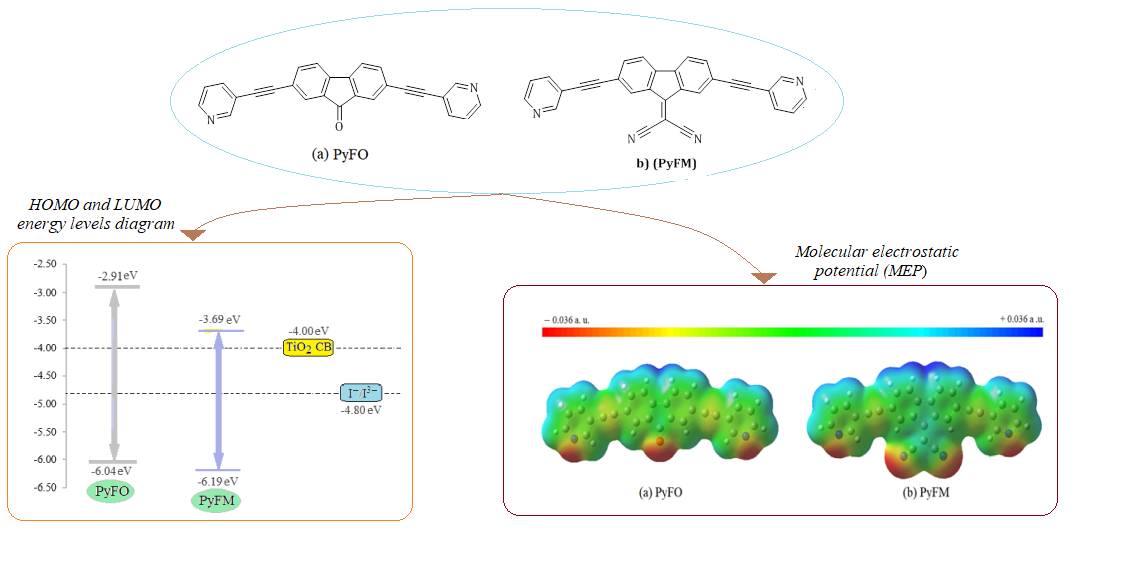
Abstract In this work, density functional theory and molecular dynamics calculations are used to explore the potential of pyridyl-fluoren-9 compounds for dye-sensitized solar cell applications. The study utilized two compounds: 2,7-bis(pyridin-3-ylethynyl) fluoren-9-ylidene) malononitrile (PyFM) and 2,7-bis(pyridin-3-ylethynyl) fluoren-9-one (PyFO). The substitution of a malononitrile group for the oxygen atom yielded PyFM from PyFO. PyFM exhibited smaller HOMO-LUMO energy gaps than PyFO due to the presence of the malononitrile group. The calculated quantum chemical descriptors of PyFM, such as hardness (η), softness (σ), and electronegativity (χ), revealed improved reactivity properties. The molecular orbital analysis identified a favorable intramolecular charge transfer between donor and acceptor components, classifying the studied molecules as D-π-A-π-D dye. The molecular electrostatic potential of PyFO and PyFM recognized their nucleophilic centers, which have significant potential for interaction with the electrophile atoms of the TiO2 surface. PyFM is predicted to exhibit high light-harvesting efficiency, as indicated by its broader, maximized, and redshifted absorbance peak at 597.02 nm in the calculated UV-vis absorption spectra. The estimated adsorption energies of PyFM dye pointed to a strong adsorption on the TiO2 surface. The study indicates that the performance of the pyridyl-fluoren-9 compound as solar cell dye can be enhanced by incorporating a malononitrile moiety instead of the oxygen atom in PyFO. This study encourages further exploration of pyridyl-functionalized fluorenes in dye-sensitized solar cell applications of pyridyl-functionalized fluoren-9 compounds in dye-sensitization solar cell applications.
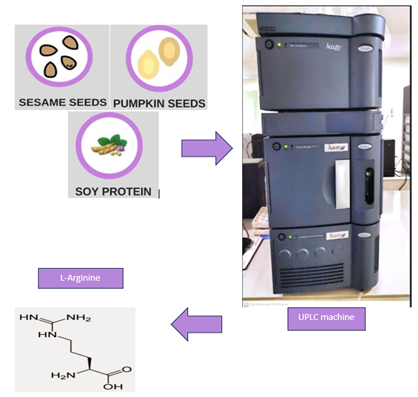
L-arginine Identification from Seeds Extract Using Ultra Performance Liquid Chromatography (UPLC) for Anti-Cariogenic Applications

Pages 789-799

https://doi.org/10.48309/chemm.2024.479360.1827

Morita Sari, Kibedi B. Cabral, Peni Indrayudha, Juwita Raditya Ningsih, Agung Nugroho

Abstract The ecological approach to caries prevention focuses on creating oral cavity conditions more immune to caries.  It is more important to make the host and environment, namely the oral cavity, more resistant to the initial caries process which begins with forming biofilms from caries bacteria. Exploration of natural materials is an option to find active ingredients that can prevent the formation of biofilms. L-arginine is one of the active ingredients that can inhibit the formation of bacterial biofilms commonly found in grains. L-arginine has been widely used as a component of toothpaste and other dentifrice products but has never been developed as a systemic caries prevention product. In this study, we examined the impact of daily consumed materials on oral health by focusing on three types of seeds: Pumpkin seeds (Cucurbita moschata), Soybean seeds (Glycine max), and Sesame seeds (Sesamum indicum). We used the UPLC (Ultra Performance Liquid Chromatography) method to determine their L-Arginine content. The results showed that Pumpkin Seeds (Cucurbita moschata) had the highest L-Arginine content, with a 100% extract concentration of 2884.47 mg or 0.29%. Notably, there was no observed correlation between extract concentration and L-Arginine content in Pumpkin and Soybean seeds. However, there was a directly proportional increase between extract concentration and L-Arginine content in Sesame seeds. In addition, the average retention time for L-Arginine was found to be 6 minutes and 24 seconds very close to another amino acid, namely L-serine.

In silico Screening, Synthesis, and in vitro Enzyme Assay of Some 1,2,3-Oxadiazole-linked Tetrahydropyrimidine-5-carboxylate Derivatives as DPP-IV Inhibitors for Treatment of T2DM

Pages 800-819

https://doi.org/10.48309/chemm.2024.479997.1830

Mayuresh Abhay Shastri, Ranjit Gadhave, Sirajunisa Talath, Adil Farooq Wali, Umme Hani, Sachin Puri, Bhagyashri Rathod, Sharuk L. Khan

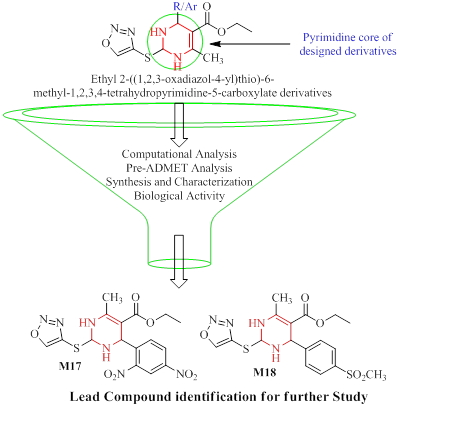
Abstract Some ethyl 2-((1,2,3-oxadiazol-4-yl)thio)-6-methyl-1,2,3,4-tetrahydropyrimidine-5-carboxylate derivatives (M1 to M20) were designed and developed as potential DPP-IV inhibitors. All the designed derivatives were subjected for binding affinity studies. Fortunately, 18 molecules displayed better binding affinity than native ligand (NL) present in the crystal structure of enzyme (PDB ID: 6B1E). From interactions of NL, it was observed that Glu206 and Arg358 are important amino acid residues to get good binding orientation. Fortunately, almost all the molecules developed at least one kind of interactions with either of these amino acids. Out of these, M17 was considered as most potent as it has developed 5 conventional-hydrogen bonds. To evaluate the stability of Compound M17 in complex with the DPP-IV enzyme, a 100 ns all-atom molecular dynamics (MD) simulation was conducted. The combination of hydrogen bonding, hydrophobic, ionic, and water-mediated interactions highlights the robust nature of the binding between Compound M17 and enzyme, ensuring the stability and efficacy of the complex throughout the simulation. From in silico screening, we have selected M3, M5, M12, M16, M17, and M18 for the synthesis. The synthesized compounds tested at 250 µM and all the compounds exhibited more than 90% of inhibition in in vitro enzyme assay. Compound M18 displayed 93.3±0.58% of inhibition and 13.14±0.49 µM of IC50 value which was highest amongst the synthesized compounds. It was concluded that, the synthesized compounds displayed optimum DPP-IV inhibitory activity, therefore these can be treated as lead nucleus for further development.

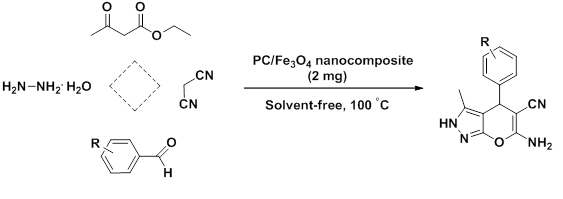
Catalytic Application of Porous Carbon/Fe3O4 nanocomposite on the Synthesis of Pyranopyrazole Derivatives

Pages 820-832

https://doi.org/10.48309/chemm.2024.482754.1837

Hamid Goudarziafshar, Maryam Zafari, Ahmad Ahmad Reza Moosavi-Zare

Abstract Porous carbon/Fe3O4 nanocomposite (PC/Fe3O4 nanocomposite) was prepared from peanut shells as biowaste material and ferrous ferric oxide and studied by various analyses such as FT-IR, SEM, TEM, BET, VSM, TGA and atomic absorption spectrometry analysis. The use of porous carbon which obtained from peanut shells as biowaste material and pyrolysis with magnetic iron oxide causes synergy and increases the catalytic ability of magnetic iron oxide. PC/Fe3O4 nanocomposite was successfully applied as a recoverable magnetite heterogeneous catalyst for the condensation reaction of ethyl acetoacetate, hydrazine hydrate, malononitrile and aromatic aldehyde at 100 ℃ under solvent free condition to give pyranopyrazole derivatives in high yields and short reaction times.

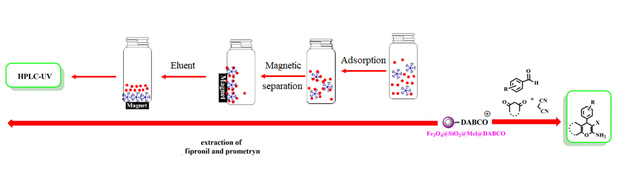
High-performance Fe3O4@SiO2@Mel@DABCO Catalyst for Synthesis of Chromene Derivatives and Solid Phase Microextraction of Fipronil and Prometryn in Food Samples Followed by HPLC-UV Determination

Pages 833-855

https://doi.org/10.48309/chemm.2024.480851.1832

Pegah Ebrahimzadeh, Behrooz Maleki, Milad Ghani, Sahar Peiman

Abstract A novel high-efficiency, reusable nanocatalyst functionalized with DABCO charge was successfully fabricated on magnetic silica. This catalyst was identified by XRD, TGA, VSM, FE-SEM, EDX, and FT-IR analyses. Fe3O4@SiO2@Mel@DABCO as a recoverable catalyst for 2-amino-4H-chromenes synthesis. Among the points that lead to the superiority of this catalyst, we can mention the use of green solvent, products with high yield (84-98%) in a short period, suitable temperature conditions, and simple collection of the reaction medium and its ability. In addition, the effectiveness of the synthesized magnetic sorbent in the microextraction method was examined. Due to the magnetic nature of the sorbents, the magnetic solid phase extraction (MSPE) was selected. Fipronil and promethrin were chosen as purpose model analytes and detected by HPLC-UV device. The results showed the LDRs in the range of 0.5-500 μg L-1 (determination coefficient higher than 0.9969). The LODs of the method were calculated to be between 0.11-0.13 µg L-1. The limits of quantification (LOQs) of the technique were also estimated to be in the range of 0.37-0.42 µg L-1. To verify the correctness of the proposed method, the relative standard deviation (RSDs%) inter-day was 2.9% and inter-day was 4.1%. The enrichment factors for fipronil and prometryn were 53 and 61, respectively. Moreover, the absolute recovery was in the range of 60-69%. The batch to batch RSD was also in the range of 3.9-4.3%. The method was successfully used to extract and determine selected pesticides in samples of tomato, cucumber, wastewater, and pear.