7.4 (Q1)
CiteScore2024
Q2
Web of Science
Volume & Issue: Volume 8, Issue 12, December 2024, Pages 856-956 
Number of Articles: 6

Green Synthesis, Analysis, and Characterization of Nano-silver-Based Conyza Canadensis (SYN: Erigeron Canadensis) Extract

Pages 856-873

https://doi.org/10.48309/chemm.2024.482493.1836

Safa Salah Salman, Ruqaya M. Al-Ezzy, Ahlem Soussi

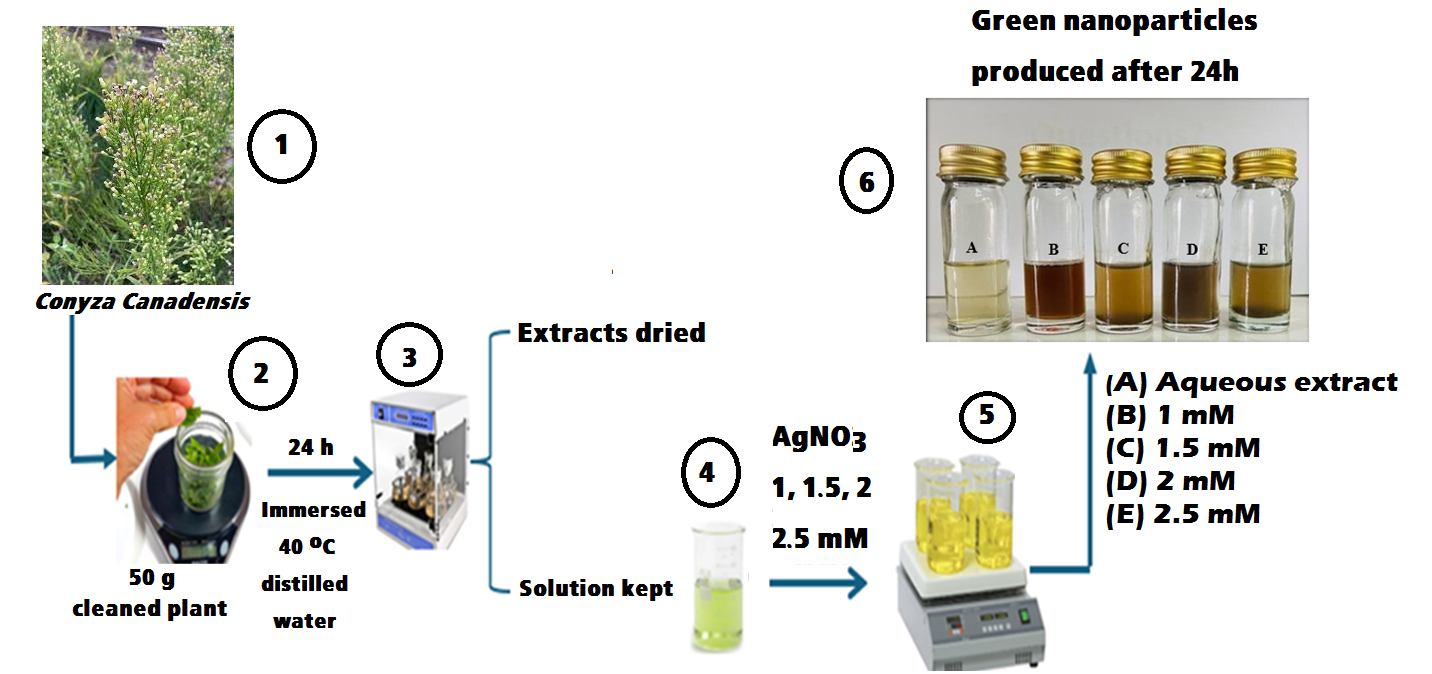
Abstract This work used an easy-to-use and quick method to create silver nanoparticles (AgNPs) from an aqueous extract of Conyza canadensis. A biological process was used to create silver nanoparticles devoid of hazardous chemical constituents. This study aims to explore the impact of using C. candensis extract as a reducing and stabilizing agent on the production of silver nanoparticles. The produced silver nanoparticles had an absorption peak at around 299 nm when examined using (UV-Vis) spectrum. The obtained silver nanoparticles are analyzed, and their shape, average size, and crystalline nature are estimated using scanning electron and Atomic force microscopy (AFM). An X-ray diffraction spectrum is used to confirm the orientation and crystal structure diffraction (XRD). The extracts may include bio-reducing chemicals, as confirmed by Fourier transform infrared (FTIR) research. Using various conventional screening techniques, the C. canadensis extract was examined to determine which phytochemical components were in charge of the biosynthesized CC-AgNPs' decrease. The biosynthesized nanoparticles and C. canadensis extract were examined for their antioxidant activity utilizing 2,2-diphenyl-1-picrylhydrazyl (DPPH) and Reductive Capacity (FRAP) tests at varying molarities. According to the study, C. canadensis is a viable source of bioactive chemicals that are being transferred from natural sources to industrial applications, including the development of novel drugs, cosmeceuticals, and nutraceuticals. Silver nanoparticles have been extensively researched as promising possibilities for antibacterial action and cancer treatment.
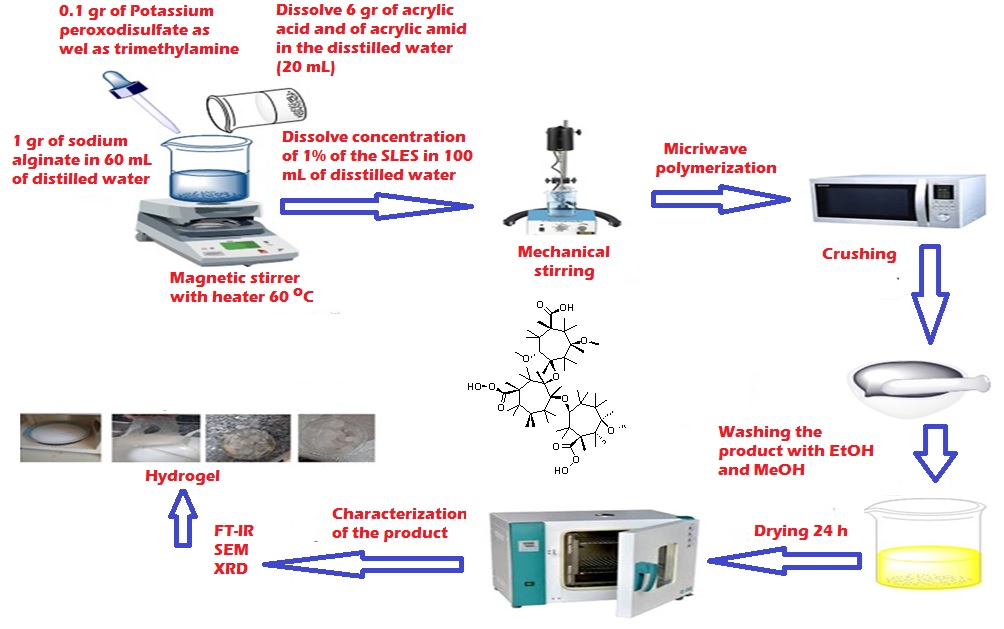
Synthesis of a Hydrogel Polymer Using Sodium Lauryl Ether Sulfate as a Surfactant and Its Application in Agricultural

Pages 874-891

https://doi.org/10.48309/chemm.2024.487533.1847

Foud Nihad Abed, Mohamed Abdelhedi

Abstract Polymer was synthesized using sodium lauryl ether sulfate as a surfactant, which enhanced porosity. A total of 1% of polymer was mixed with 1 kg of soil. Which had been purified and went through a 2 mm mesh screen. The soil took two full months to dry completely at a temperature of 35 °C. Subsequently, sunflowers and fodder maize were planted in both the polymer-treated soil and an untreated soil. Calcium, potassium, sodium, iron, nitrogen, and phosphorus levels in the plants grown in both types of soil were measured. The results showed significant differences. The chlorophyll content, dry weight, wet weight, and moisture content of the plants were also measured. The polymer was found to effectively improve all these properties, demonstrating the viability of this method, which could play an important role in semi-arid regions.

Theoretical Investigation of Methyl Orange and Methyl Blue Dyes by DFT

Pages 892-903

https://doi.org/10.48309/chemm.2024.488559.1850

Sarah M. S. Al-Mohana, Hussein Neama Najeeb, Ferydon Babaei

Abstract The impact of adding a methyl group on the electronic and thermal properties of pure and doped methyl orange (MO) as well as methyl blue (MB) dye molecules was determined in this work using the hybrid functional B3LYP density functional theory. The electron affinity, electronegativity, and ionization energy were computed using the orbital vertical approach. The placement and number of methyl subgroups affected these energies, as revealed by the results. The addition of the methyl group reduced the energy gap, suggesting the creation of novel molecules with distinct electronic configurations. The incorporation of methyl groups into the molecule increases the thermal energy, indicating higher heat capacity and entropy of the dye. Furthermore, the inhibitor with the highest electron transfer percentage is associated with the best inhibition, while the inhibitor with the lowest fraction exhibits the least inhibition efficacy. Overall, the results demonstrated that these dyes interact strongly with other species or molecules, including DNA and cancerous cells.

Topological Descriptors-Based QSPR Analysis of Quercetin Derivatives and their Application in Dextran-Quercetin Conjugates Targeted against Cancer Treatment

Pages 904-929

https://doi.org/10.48309/chemm.2024.480865.1833

Syed Ajaz Kareem Kirmani, Parvez Ali

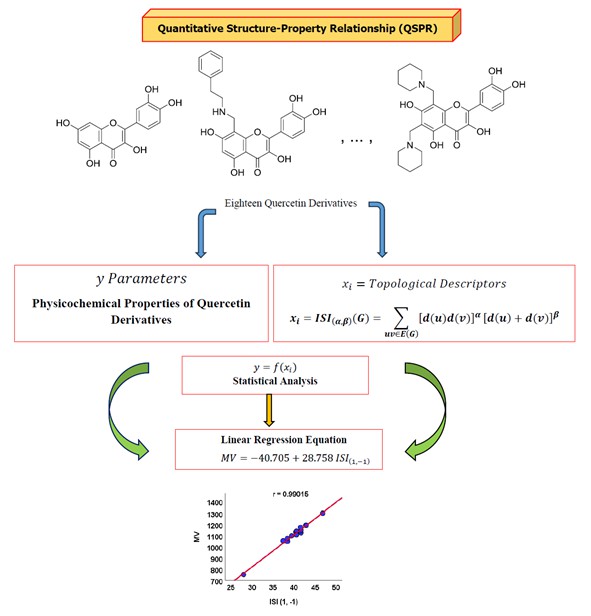
Abstract Quercetin is a potent antioxidant that occurs naturally, but its poor water solubility and stability make it limited suited for therapeutic use. A water-soluble polymer or conjugate with greater stability than natural quercetin is yielded when quercetin is conjugated to an aldehyde-functionalized dextran. The conjugate demonstrated both antioxidant and anticancer properties in vitro. In quantitative structure–property/activity relationship (QSPR/QSAR) research, a topological index is a type of molecular descriptor that simply defines numerical values associated with a substance's molecular structure when modeling various physicochemical properties. In this work, general inverse sum indeg index and neighborhood M-polynomial approaches were used to investigate numerous degree-based and neighborhood degree sum-based topological indices for dextran-quercetin conjugates. Furthermore, a QSPR was conducted to evaluate the effectiveness of the calculated topological indices by contrasting the different topological indices with the physicochemical characteristics of eighteen derivatives of quercetin. The results showed a substantial relationship between the topological indices under investigation and the physicochemical characteristics of the quercetin derivatives.

Dual-Function Polymeric Nanomaterials for Adsorption/Photo-Treatment of Oil Spills in Aqueous Solutions

Pages 930-943

https://doi.org/10.48309/chemm.2024.413788.1835

Ruhma Rashid, Muhammad Maaz, Iqrash Shafiq, Murid Hussain, Naseem Abbas, Muhammad Rehan Hassan Shah Gilani, Leonid Voskressensky, Rafael Luque

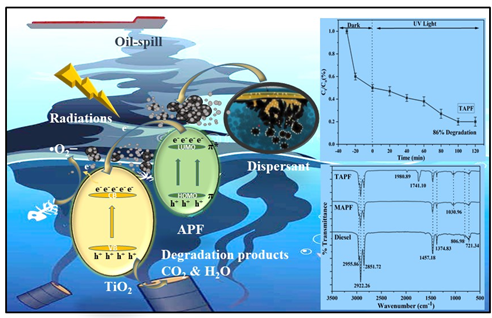
Abstract The implementation of photocatalytic approaches to treat petroleum-derived waste e.g., oil spills has recently gained popularity. While using dispersants to treat marine oil spills has proven effective, traditional dispersants only achieve monolayer oil dispersion. This study proposes modified metal semiconductors with aminophenol formaldehyde (APF), an efficient particle dispersant with photocatalytic activity, for removing oil spills from aqueous environments. Effective photocatalytic nanocomposites were synthesized through a simple solvothermal process, combining TiO2 and Fe3O4 metal semiconductors in a conducting APF polymer (MAPF and TAPF). These materials can offer high adsorption capacity and hydrocarbon photo-degradation. Both MAPF and TAPF showed strong photocatalytic performance, achieving up to 74% and 86%, respectively. This combination of dispersion, adsorption, and photocatalysis offers a novel approach to managing oil spills in marine environments.

Heracleum sosnowskyi π‘€π‘Žπ‘›π‘‘π‘’π‘›. as a Source of Valuable Chemicals (Elimination with Utility)

Pages 944-956

https://doi.org/10.48309/chemm.2024.490652.1854

Ekaterina S Osipova, Evgeny A Gladkov

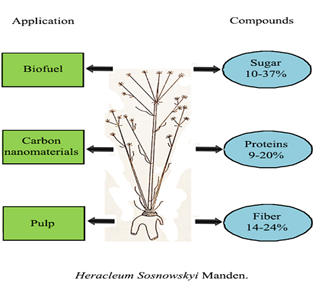
Abstract Heracleum sosnowskyi Manden., or hogweed, of the Umbelliferae family, was first cultivated in the USSR in 1947 as a potential fodder plant. Due to the development of cold-resistant cultivars and the characteristics of H. sosnowskyi, it quickly became feral. As a result, H. sosnowskyi began to spread as an aggressive invasive species in the 1970s and 1980s. By the 1990s, it had become an ecological disaster. H. sosnowskyi forms monocultures, displaces native species, and contains furanocoumarins—photosensitizing compounds that increase skin sensitivity to ultraviolet radiation, leading to severe dermatitis. The question of how to control H. sosnowskyi has arisen. One method of control is regular cutting. A large amount of biomass is left when the hogweed is cut. Given that H. sosnowskyi contains a high amount of sugars, carbohydrates, and proteins, it can be used to produce biofuel, pulp, and carbon nanomaterials. The use of H. sosnowskyi for economic purposes could help mitigate the problems caused by this aggressive invasive species.