7.4 (Q1)
CiteScore2024
Q2
Web of Science
Volume & Issue: Volume 9, Issue 2, February 2025, Pages 81-157 
Number of Articles: 4

Molecular Docking and Dynamic Simulation with ADMET Exploration of Natural Products Atlas Compound Library to search for Potential Alpha Amylase Inhibitors for the T2DM Treatment

Pages 81-102

https://doi.org/10.48309/chemm.2025.488471.1849

Venugopal Muralidharan, Rahul Ashok Sachdeo, Laliteshwar Pratap Singh, M. Akiful Haque, Uttam Prasad Panigrahy, Abhishek Kumar Mishra, Touseef Begum, Mirza Shahed Baig

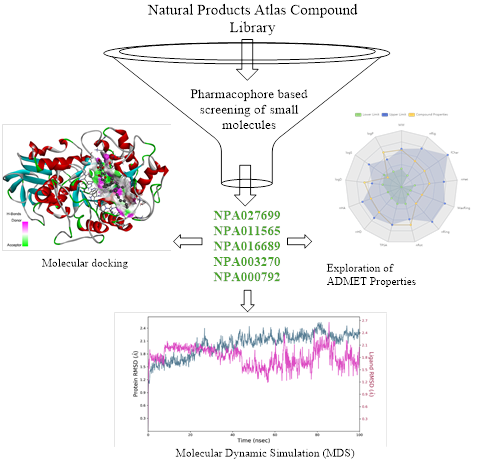
Abstract One of the major global causes of early mortality and illness is diabetes. Diabetes mellitus, a global metabolic condition, affects almost every age group in the world's population. The primary cause of diabetes is insufficient pancreatic function, which occurs when the organ fails to produce enough insulin or fails to adequately use the insulin it produces. The aim of this study is to identify a lead drug as a potent alpha-amylase inhibitor to fight T2DM. We determine the pharmacological alpha amylase target (PDB ID: 3BAX) through extensive analyses and reviews of the available literature. We used a pharmacophore query to search the Natural Products Atlas library for a potent inhibitor. The PyRx version of AutoDock Vina is utilized for the docking process. We use the Desmond software to identify the stability of complexes in physiological environments. According to our analysis, the primary substances NPA016689 and NPA011565 are potent inhibitors against alpha-amylase (3BAX). After determining the lead, we identified the NPA016689 and NPA011565 compounds as the most reactive, with binding affinities of -9.3 kcal/mol and -9.2 kcal/mol, respectively. TYR_A:62, TYR: A_151, LYS: A_200, HIS: A_201, ILE: A_235, and HIS: A_305 residues critically interacted with the NPA016689 ligand. Similarly with ligand NPA011565, the binding residues were TRP: A_59, THR: A_163, LEU_A:165, ARG: A_195, ASP_A:197_A:198, GLU: A_233, and HIS: A_299. This study concluded that NPA016689 and NPA011565 have the potential to modulate the activity of alpha-amylase enzyme, making them potential lead molecules for the design or development of additional anti-alpha-amylase compounds.
Evaluation of Ze/PAN Nanocomposites for Adsorption of Cs (Ι) from Aaqueous Environments

Pages 103-124

https://doi.org/10.48309/chemm.2025.492596.1858

Atousa Dolatyari, Abdolreza Nilchi, Simin Janitabardarzi, Arash Alipour, Marjan Hashemi

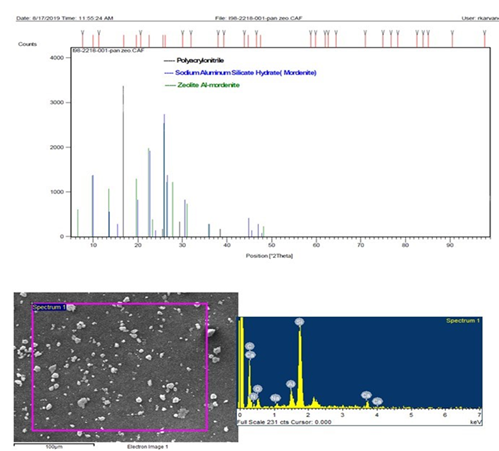
Abstract Recently, there has been an increasing trend in using nano adsorbents to remove harmful metal ions, like cesium. However, the search for a natural adsorbent that can be sourced from the environment and demonstrate satisfactory efficacy remains unfulfilled. This study utilized a zeolite–polyacrylonitrile nanocomposite (Ze@PAN) as an adsorbent to separate cesium from an aqueous medium. Various characterization methods, including FT-IR, SEM, XRD, XRF, EDX, BET, and TGA, were employed to investigate the synthesized nanocomposite. To determine the optimal conditions for adsorption, we examined the impact of the initial pH of aqueous solution, contact time, solution temperature, reusability, and stability of cesium on the Ze@PAN nano sorbent. In addition, we calculated the adsorption thermodynamic factors, like standard entropy, enthalpy, and Gibbs free energy, which proved that the reaction is endothermic and spontaneous. We evaluated the Freundlich, Temkin, and Langmuir isotherm models, finding that cesium sorption on the synthesized sorbent was best represented by the Langmuir model (qmax = 59.52 mg g-¹) and the Freundlich model (KF = 6.40 (mg g-¹) (L mg-¹ 1/n). Finally, to assess the reaction kinetics of the synthesized nanocomposite, we explored various equations, including the pseudo-first order, pseudo-second order, and simple Elovich equations. Our findings showed the consistency between the reaction mechanism and the pseudo-second-order kinetic model. Overall, the findings suggest that the synthesized nano adsorbent is an effective and valuable material with a large surface area relative to its volume, making it suitable for both environmental and industrial applications.

Diagnosis of Infecting Pathogen Bacteria by Multiplex PCR and Evaluation of Inhibition Antibiofilm Using Zinc Oxide Nanoparticle

Pages 125-141

https://doi.org/10.48309/chemm.2025.496110.1860

Shahad Nahedh Hussein, Najwa Shihab Ahmed, Radhouane Gdoura

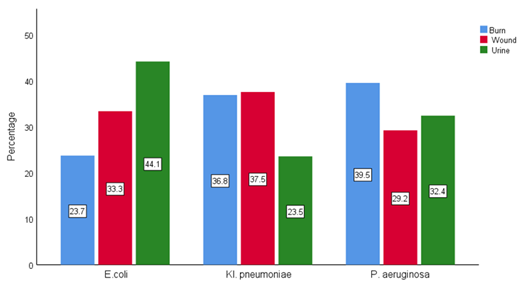
Abstract Bacterial infections can occur in various body tissues, including the respiratory tract, urinary tract, gastrointestinal tract, and bloodstream. This study aimed to identify three important pathogenic species—Escherichia coli, Klebsiella pneumoniae, and Pseudomonas aeruginosa—using both phenotypic and genotypic methods. Bacterial isolates were initially identified through standard diagnostic tests and confirmed by multiplex PCR. Three randomly selected isolates corresponding to each pathogen were subjected to gene sequencing and compared with reference strains from NCBI. In addition, the anti-biofilm activity of zinc oxide (ZnO) nanoparticles biosynthesized from Lactobacillus spp. extract was evaluated. The synthesized ZnO nanoparticles were characterized using FTIR, XRD, FE-SEM, and AFM. XRD analysis revealed distinct peaks indicative of a crystalline phase, while AFM and FE-SEM showed spherical nanoparticles with an average diameter of 58.30 nm. The study also assessed the ability of ZnO nanoparticles to inhibit biofilm formation. Results revealed no statistically significant association between the sample type (burn, wound, and urine) and the infecting pathogen (p=0.37). Multiplex PCR amplification was successful in 28 isolates, with co-infections detected as follows: 57.15% of isolates showed triple infection (all three pathogens), while double infections were observed in 57.14% (E. coli and P. aeruginosa), 46.42% (E. coli and K. pneumoniae), and 42.86% (P. aeruginosa and K. pneumoniae) of isolates. Single infections were detected in 50.01% (E. coli), 28.58% (P. aeruginosa), and 17.86% (K. pneumoniae) of isolates. Sequencing analysis revealed 99% and 98% similarity with reference genes for E. coli, P. aeruginosa, and K. pneumoniae, respectively. A highly significant reduction in biofilm formation was observed after treatment with ZnO nanoparticles (p≤0.001). In conclusion, genotypic and phenotypic methods were effective for pathogen identification and ZnO nanoparticles demonstrated significant potential in inhibiting biofilm formation, offering a promising approach for combating bacterial infections.

Discovery of Pyrazole-Based CDK8 Inhibitors Using High-Throughput Virtual Screening

Pages 142-157

https://doi.org/10.48309/chemm.2025.499884.1880

Sobhan Ghazimoradi, Seyyed Mohammad Mahdi Mousavi Bidak, Masoumeh Fallah Ziarani, Sorour Ramezanpour

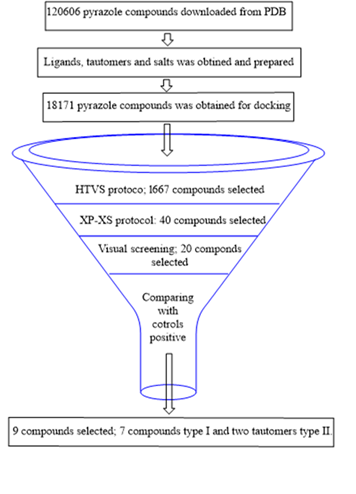
Abstract Cancer remains a global health challenge, driving extensive research to discover effective treatments. This study introduces a novel approach by employing High-Throughput Virtual Screening (HTVS) to identify new pyrazole-based inhibitors of CDK8, a key enzyme implicated in cancer progression. Using Schrödinger's Maestro software, two crystal structures of CDK8 and 12,606 pyrazole compounds were analysed. Through multiple stages of virtual and visual screening, seven type I and two type II inhibitors (tautomers) were identified. The ADME properties of these compounds were evaluated using the QikProp function, revealing favourable pharmacokinetic profiles. The novelty of this study lies in its focus on the pyrazole scaffold, which enhances binding interactions with CDK8, and its use of HTVS as a cost-effective and efficient alternative to traditional laboratory methods. This approach not only accelerates the discovery of potential anticancer agents, but also provides insights into the role of pyrazole in enzyme inhibition.