7.4 (Q1)
CiteScore2024
Q2
Web of Science
Volume & Issue: Volume 9, Issue 6, June 2025, Pages 403-488 
Number of Articles: 6

Application of Basic Magnetic Phase Transfer Nanocatalysts in the One-Pot and Multicomponent Synthesis of Poly-Substituted Aniline

Pages 403-416

https://doi.org/10.48309/chemm.2025.486122.1843

Hassan Hassani, Somayeh Heidary, Sayed Hossein Banitaba

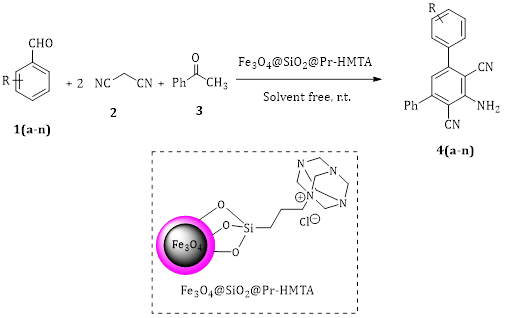
Abstract Using a nano-phase-transfer catalyst (NPTC) to facilitate diverse organic reactions offers a promising approach to achieve mild, synergistic, and multi-component synthesis of valuable compounds under heterogeneous conditions. This study describes the synthesis of 3,5-diaryl-2,6-dicyanoanilines through a tandem cyclocondensation reaction using commercially available reagents and Fe3O4@SiO2@Pr-HMTA (hexamethylenetetramine) as the NPTC. The reaction takes place in water, a green solvent, and involves the condensation of acetophenone, malononitrile, and an aromatic aldehyde at room temperature. Notably, this methodology represents the first green, one-pot process for synthesizing poly substituted aniline derivatives using magnetic phase transfer catalyst in water.
Feasibility Study and New Proposal for Oil Removal

Pages 417-426

https://doi.org/10.48309/chemm.2025.506325.1901

I.B. Sapaev, Abdieva Nargiza Shukhratovna, Ulugbek Tulakov, N. Esanmurodova, Mansur Kholmirzaev, Tadjibaeva Muyassar Karimbaevna, Shodikulov Zhurabek, Nurutdinova Madinabonu Chorievna, Asrorbek Omarov, Gulnoz Bahodirova Kamolovna

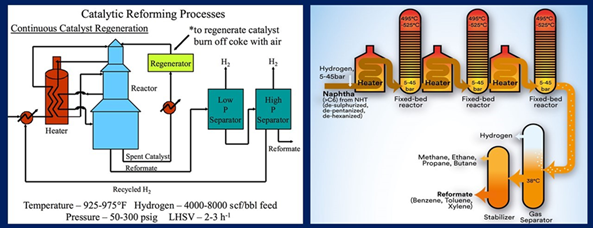
Abstract One of the problems with refining gasoline complexes is the high speed of corrosion. This is due to the higher amount of water and chlorine in the hydrogen outlet from the catalyst recovery vessel. Chlorine and water exist together with various hydrocarbons produce oil. Green oil is an oligomer found in refineries in all C2, C3, and C4 hydrocarbon reactors. It is a combination of C2 and C20 unsaturated and other active elements along with water and chlorine. In the present study, the removal of this substance in the hydrogen gas from the reclaiming chamber of the Naphtha treatment plant with continuous revival is investigated. Design of chlorine adsorbent container is one of the most important strengths of this study. By taking action, one of the main problems of the catalytic conversion units in French and American companies has been resolved. According to the best results to achieve maximum efficiency of gasoline product with octane number 95: catalyst circulating flow 800 kg/hr, 5.5 Barg pressure of the gas compressor output, 0.95 wt% catalyst chloride concentration, 261 °C temperature, 0.37% A volume of benzene is produced that calculates the catalytic, conversion unit mass efficiency of 96% wt and the volumetric efficiency of 88%, Under these conditions, coke formed 3.64%, purity of circulating hydrogen gas equal to 94%, H2/HC molar ratio of 2.7.

Development and Validation of Stability Indicating LC Method for Selexipag: In-Silico Toxicity Study and Characterization of its Degradation Products

Pages 427-447

https://doi.org/10.48309/chemm.2025.507044.1903

Kavita R. Chandramore, Sandeep S. Sonawane, Rohan S. Ahire, Haritha Reddy Nagidi, Sandip Barku Ahire, Pravin B. Jadhav, Touseef Begum, Falak A. Siddique

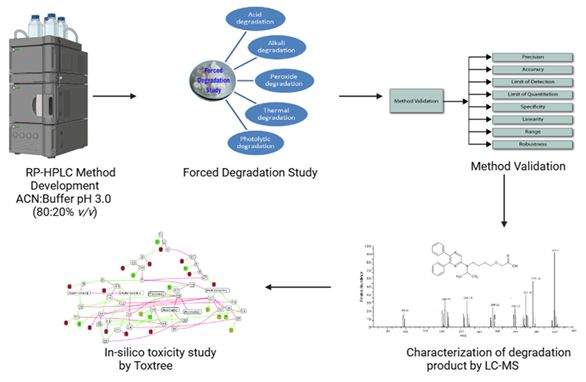
Abstract An RP-HPLC method for quantifying selexipag in bulk and tablet formulations was developed and validated, and was found to be fast, sensitive, precise, accurate, and stable. Isocratic separation of Selexipag (SLG) was carried out using a Kromasil C18 column (150 mm×4.6 mm, 5μm) with a mobile phase that included 80:20% v/v of acetonitrile and phosphate buffer (pH 3.0) at a flow rate of 1.0 mL/min. The column was maintained at 30 ± 2 °C and the wavelength for detection was set to 270 nm. The SLG peak was detected at 3.380 minutes. The proposed method was linear within the 05-25 μg/mL range, with both drugs having a correlation value of 0.999. For DL, it was 0.633 μg/mL and for QL, it was 1.920 μg/mL. Although oxidative and photolytic degradation were able to stabilize SLG, acidic, alkaline, and humid heat conditions caused it to disintegrate. Liquid chromatography-mass spectrometry (LC-MS) analysis was used to verify the degradation products. The m/z of the moist heat degradation product was 454.54, while the alkali degradation product had an m/z of 419.51. Even when degradation products were present, the RP-HPLC measurements of SLG were sensitive, accurate, and exact, suggesting that the substance was stable. During the examination of SLG, it was determined that it degrades under acidic, alkaline, and moist heat conditions, whereas it is stable under oxidative and photolytic conditions. LC-MS analysis was performed to confirm the presence of degradation products.

A Mini-Review on the Studies Done on the Acidification of Carbonate Rock Matrix

Pages 448-460

https://doi.org/10.48309/chemm.2025.507142.1904

I.B. Sapaev, N. Esanmurodova, Abduraimova Maftunakhan Akhmatovna, Khayitmuradov Anvarjon, Alijon Khatamov, Shodiyev Asliddin, Akramova Ziyoda Shukrillayevna

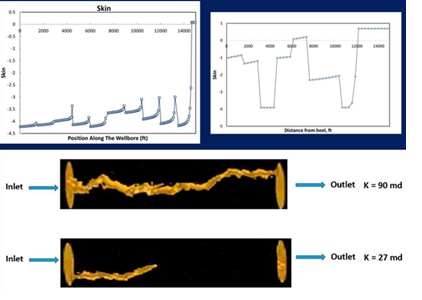
Abstract In the present study, a review of the studies conducted regarding acidification of carbonate rock matrix has been done. One of the main and important problems in the oil industry is the low yield of oil and gas wells due to damage to the formation, or unfavorable characteristics of the formation, including low permeability. The main purpose of matrix acidification is to stimulate the reservoir to remove the flow obstacles of oil and gas production fluids. In carbonate reservoirs, due to the heterogeneity, the complexity of the cavity system and their specific materials, the acidification process faces important challenges for oil and gas production. Homogeneous and appropriate distribution of injected acid in the target area, especially in horizontal and deviated wells, is a major challenge in the design of the acidification process. Deviation of acid flow in carbonate and sandstone reservoirs is more complicated due to their high reactivity with injected acid. The review of the existing studies showed that the increase in permeability occurred with the formation of a dominant cavity and performing acid treatment with 28% HCL acid, the total pressure drop decreased and the permeability and finally the production rate increased significantly. Likewise, the radius of the wormhole decreases with higher the tank temperature. The reason for this reduction is that with the increase in temperature, the speed of the reaction and thus the ability of the acid to react with the stone increases.

Repurposing Nafithromycin for Lung Cancer Therapy: Targeting Urokinase-Type Plasminogen Activator (uPA) via Molecular Docking and Dynamics Study

Pages 461-472

https://doi.org/10.48309/chemm.2025.508638.1909

Ansari Vikhar Danish Ahmad, Mohd Sayeed Shaikh, Yasar Qazi, Ammar A. Razzak Mahmood, Raja Shekar Perusomula, Gobalakriahnan P., Touseef Begum, Sharuk L. Khan

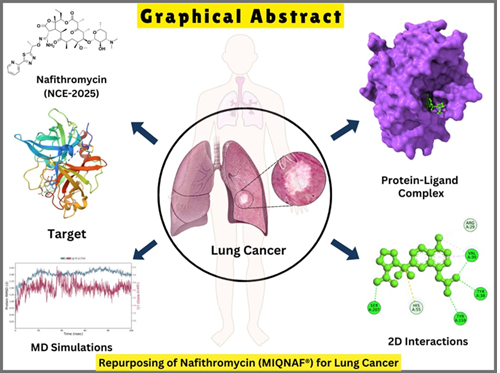
Abstract Lung cancer remains the leading cause of cancer-related deaths worldwide, demanding urgent advancements in early detection and targeted therapy. This study aimed to explore the potential of Nafithromycin for treating lung cancer by targeting the urokinase-type plasminogen activator (uPA), which is linked to tumor growth and metastasis. Molecular docking revealed that Nafithromycin had a higher binding affinity (-8.2 kcal/mol) than the native ligand (-6.9 kcal/mol). MD simulations over 100 ns revealed the stable formation of the drug, which included strong hydrogen bonds with key residues, such as HIS55, GLY228, and SER226. Nafithromycin, like azithromycin and clarithromycin, can be combined with anticancer agents to increase their efficacy in lung cancer treatment. Nafithromycin has the potential repurposed as an anticancer agent by targeting the uPA system, supporting further research on lung cancer treatment.

Palladium-Catalyzed Transfer Hydrogenation of Saturated Compound Using Formic Acid as the Hydrogen Source

Pages 473-488

https://doi.org/10.48309/chemm.2025.510656.1913

Batoul Taleb, Rabih Jahjah, Zaher Abdel Baki, Akram Hijazi, Fatima Elchami, Mohammad Dakdouki

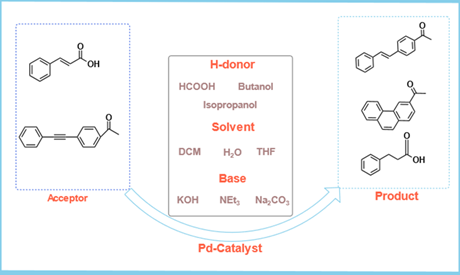
Abstract Catalytic transfer hydrogenation (CTH) is a vital method for selective reduction reactions in organic synthesis, involving the transfer of hydrogen from a donor molecule to a substrate in the presence of a catalyst. This study aims to optimize the catalytic transfer hydrogenation process for sustainable synthesis by investigating the hydrogenation of cinnamic acid using PdCl₂ and Pd(acac)₂ catalysts under various reaction conditions. We systematically studied the impact of different reaction parameters, including hydrogen donors, solvents, bases, and catalyst loading, emphasizing the importance of each factor for achieving optimal catalytic performance. Notably, water emerged as the most effective solvent for PdCl₂ at 90 °C with 2 mol% catalyst loading, achieving a 100% yield of phenylpropanoic acid. This outcome aligns with the principles of green chemistry, as water—an environmentally friendly solvent—reduces the need for toxic or hazardous alternatives. The presence of a base is essential for achieving maximum efficiency, with KOH resulting in a 99% yield. In addition, PdCl₂ at 2% catalyst loading proved highly efficient, achieving excellent results under these conditions. In the case of Pd(acac)₂-catalyzed 4'-phenyl(ethynyl)acetophenone reduction, ultrasonication significantly accelerated the reaction, achieving 100% conversion in just 1 hour at 60 °C, compared to 7–24 hours required with conventional heating. Ultrasonication not only enhanced reaction rates, but also improved selectivity, providing an energy-efficient alternative to traditional heating methods. These findings offer valuable insights into optimizing catalytic transfer hydrogenation, emphasizing the critical roles of catalyst, solvent, base, heating method, and hydrogen donor in achieving efficient, selective, and sustainable reductions.