7.4 (Q1)
CiteScore2024
Q2
Web of Science
Volume & Issue: Volume 9, Issue 10, October 2025, Pages 851-993 
Number of Articles: 8

Design, Synthesis and Evaluation of Novel Phenyl-(1-morpholine-4-dimethyl/piperazin-1-ylmethyl)-1H-indol-3-ylmethylene Amine Derivatives Against Breast Cancer Cells

Pages 851-866

https://doi.org/10.48309/chemm.2025.517119.1938

Ranjit Vinayak Gadhave, Rutuja Sadashiv Dhongade, Shweta Dilip Raut, Mayuresh Abhay Shastri, Preeti Prashant Mehta, Yogita Sachin Ozarde

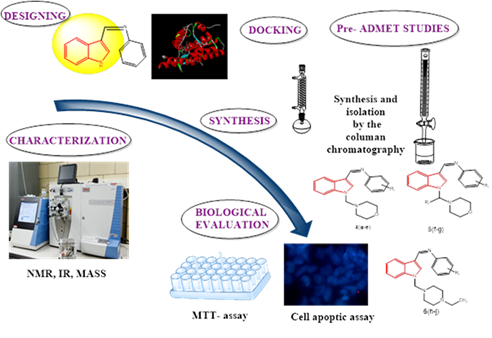
Abstract The indole derivatives, phenyl-(1-morpholin-4-yl methyl/piperazine-1-yl methyl)-1H-indol-3-ylmethylene amines were designed for interaction with progesterone receptor. The molecular docking was performed on progesterone receptor using crystal structure with PDB ID: 4OAR. Out of 139 designed molecules 10 molecules showed good binding interactions withGlu-695, Asp-697, and His-770amino acid residues, which are vital for required binding orientation of target protein binding cavity and are similar to interactions of reference standard Sunitinib. The combination of hydrogen bonding, hydrophobic, and ionic interaction confirmed the robust nature of the ligand-protein binding and docking score ranged from -7.5 to -9.9 kcal/mol. IBMA-2 demonstrated the most potent binding affinity of -9.9 kcal/mol.  The synthesized compounds were evaluated on MCF-7 cell line for anticancer activity. In the MTT and cell apoptosis assays IFMA-4 and IFMA-5 showed significant activity with IC50 values of 37.13±0.64 μg/mL and 40.94±0.86 μg/mL, respectively, compared to reference standard Sunitinib having IC50 value 30.05±0.96 μg/mL. Molecular docking study aligned with the biological activity results. The study highlighted the role of progesterone receptor in treatment of hormone receptor positive breast cancer. The synthesized compounds displayed optimum biological activity. Therefore, these can be treated as lead nucleus for further structural modifications.
Synthesis of Novel Zinc Oxide/Glycyrrhiza Glabra/Curcumin Nanocomposite and Investigation of Its Antibacterial Properties Against Dental Biofilm

Pages 867-880

https://doi.org/10.48309/chemm.2025.517116.1939

Porya Gorji, Mohsen Safaei, Mojgan Mohammadi Mehr, Mohammad Salmani Mobarakeh, Bita Rohani

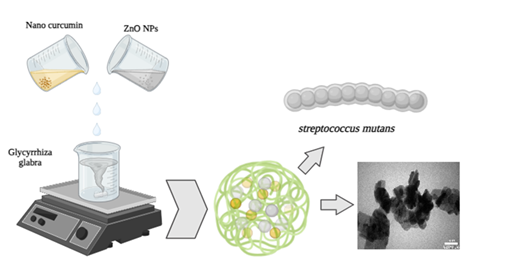
Abstract The emergence of antimicrobial resistance in Streptococcus mutans (S. mutans), a primary causative agent of dental caries, necessitates the development of novel antibacterial agents. New technologies, like antibacterial nanomaterials, provide potential solutions. This study synthesized a zinc oxide/glycyrrhiza glabra/curcumin nanocomposite by in situ method and evaluated its efficacy against S. mutans biofilm. Using the Taguchi method, we optimized the synthesis conditions by varying concentrations of zinc oxide nanoparticles (1, 2, and 3 mg/mL), glycyrrhiza glabra extract (3, 6, and 9 mg/mL), and nanocurcumin (10, 20, and 30 µg/mL). The nanocomposite synthesized under optimal conditions (3 mg/mL ZnO, 9 mg/mL Glycyrrhiza glabra, and 20 µg/mL nanocurcumin) demonstrated remarkable antibacterial activity, reducing bacterial viability to 0.18 log10 CFU/mL. Characterization via various analyses confirmed the homogeneous dispersion of nanoparticles and successful interaction among components. The potent antibacterial properties and structural stability of nanocomposite highlight its potential as an effective alternative for combating dental biofilm-associated infections.

HR-LCMS and Molecular Docking Analysis of Phytochemicals from Adiantum spp. Reveal Potential Wound Healing Candidates

Pages 881-903

https://doi.org/10.48309/chemm.2025.520891.1952

Swati A Pagar, Nilima A Thombre

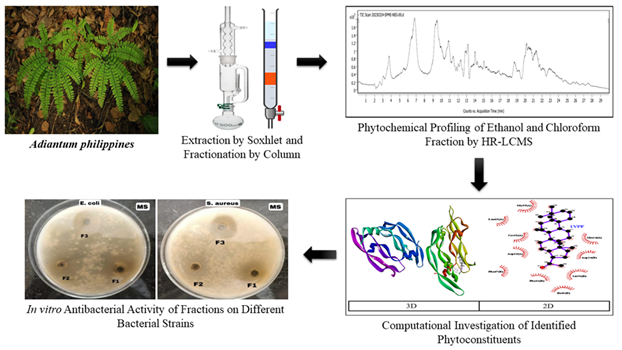
Abstract This study involved the evaluation of bioactive compounds from Adiantum philippines using molecular docking and HR-LCMS analyses to identify candidates for wound healing. The methanolic extract of Adiantum philippines fraction shows the presence of total phenolic content at 121.87 ± 4.09 mg gallic acid equivalents per gram, as well as the highest total flavonoid content at 69.54 ± 3.54 mg quercetin equivalents per gram. Molecular docking revealed that lucuminamide and Adiantone had the highest binding affinity with TGF-β (-11.8 kcal/mol). In antibacterial activity 100 µg/mL concentration, the methanolic extract of Adiantum philippines produced inhibition zones measuring 21.8 ± 0.3 mm for E. coli and 22.2 ± 0.7 mm for S. aureus, whereas the chloroform extract Showed inhibition zones of 22.9 ± 0.7 mm for Escherichia coli and 21.4 ± 0.8 mm for Staphylococcus aureus. Molecular docking suggests potential candidates for wound healing, and may provide a basis for further therapeutic research.

Cost-Effective Synthesis of Gamma Alumina for Propane Dehydrogenation: A Study of Raw Materials, Process Optimization, and Catalyst Performance

Pages 904-921

https://doi.org/10.48309/chemm.2025.521098.1954

Faraz Khanbolouk, Farshad Yazdani, Mohammad Hossein Fatemi, Mohammad Y. Najafabadi

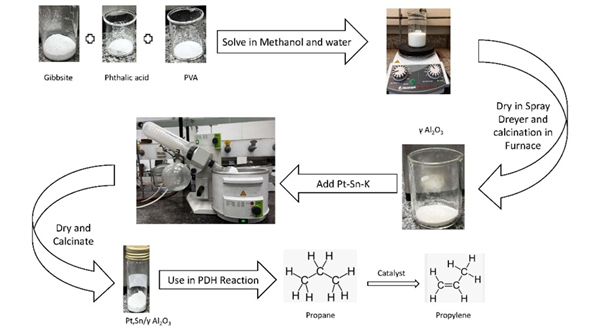
Abstract The high cost of catalyst production poses a major challenge in industrial processes like propane dehydrogenation (PDH), where γ-alumina (γ- Al2O3) is a key support. Over the past two decades, efforts have focused on lowering costs by optimizing raw materials and synthesis techniques. This study introduces a cost-effective, scalable method to synthesize γ-Al2O3 with high surface area, narrow pore size distribution, and optimal pore diameter to improve PDH performance. Gibbsite, an economical and abundant precursor, was used with methanol and ethanol to enhance textural properties. The synthesis involved precipitation followed by spray drying to produce uniform macro-spherical particles. Optimization via Box-Behnken response surface methodology (RSM) maximized surface area and pore features. Characterization using BET, FT-IR, TGA, XRD, SEM-EDX, and zeta potential confirmed the high thermal stability and structural integrity of the material, achieving a surface area of 184.95 m²/g. A Pt-Sn/γ- Al2O3 catalyst was then prepared and tested in PDH, showing propane conversion over 37% and propylene selectivity around 82%. This work demonstrates the potential of using low-cost raw materials and simplified synthesis routes to produce high-performance catalyst supports efficiently. The approach reduces production costs while maintaining catalytic activity, presenting a practical solution for industrial applications. Overall, the findings support ongoing efforts to make heterogeneous catalysis more economical without compromising performance in petrochemical processes.

Comparative Thermodynamic and Chemical Characterization of PEGylated Dendrimers and Aptamer-Guided Niosomes for Oleuropein Delivery to Brain Metastases

Pages 922-937

https://doi.org/10.48309/chemm.2025.525728.1964

Abdallah Al Jammal⸸, Mohamad T. Raad⸸, Hassan El Said⸸, Hassan HajjHussein⸸, Najwa Baassiry⸸, Sami Tlais⸸, Mohammad Reza Bigdeli⸸, Fatemeh Mortazavi Moghadam⸸

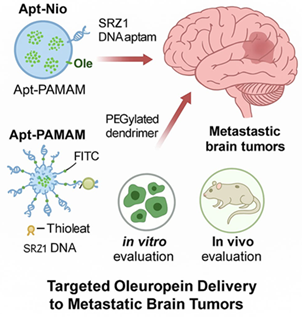
Abstract Developing chemically specific nanocarriers for targeted brain tumor therapy remains a clinical challenge. In this study, we present a comparative chemical and thermodynamic characterization of two oleuropein-based nanosystems: PEGylated PAMAM dendrimers and aptamer-functionalized niosomes (Apt-Nio-Ole), engineered for selective targeting of 4T1 breast cancer brain metastases using SRZ1 DNA aptamers.
The PAMAM nanoplatform was constructed via stepwise conjugation of oleuropein, FITC, and aptamers through esterification, thiourea, and EDC/NHS coupling. Apt-Niosomes were prepared by thin-film hydration, followed by aptamer surface functionalization. Both systems were characterized via DLS, FE-SEM, and zeta potential analysis, while cytotoxicity and cellular uptake were assessed by MTT assay, flow cytometry, and fluorescence microscopy.
Apt-Nio-Ole and Apt-PAMAM-Ole exhibited mean sizes of 93.73 ± 3.72 nm and 107.52 ± 6.81 nm, PDI values of 0.21 ± 0.05 and 0.31 ± 0.09, and zeta potentials of –17.88 ± 3.52 mV and –21.59 ± 4.26 mV, respectively. Entrapment efficiency and release rates were higher for Apt-Nio, whereas Apt-PAMAM offered enhanced chemical precision. Both systems showed high cytotoxicity against 4T1 cells (IC₅₀: 36.93 µg/mL vs. 46.5 µg/mL) and selective brain uptake in vivo.
This study highlights PEGylated dendrimers as compact, cost-effective, and chemically tunable platforms for sustained and targeted drug release. Compared to vesicular systems, they offer superior imaging potential and surface modification flexibility—making them promising nanocarriers for clinical translation in brain-targeted drug delivery.

A Systematic Review on the Role of Silver Nanoparticles in Treatment of Oral Cancer

Pages 938-953

https://doi.org/10.48309/chemm.2025.522423.1959

Mohsen Safaei, Davood Cheraghpouran, Ling Shing Wong, . Amina, Shraddha Rathi, Shaista Afroz, Razieh Rezaei

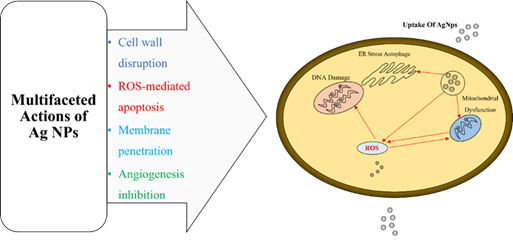
Abstract Oral cancer is a deadly and serious threat to humanity. Unfortunately, despite the existence of many clinical methods in the diagnosis and treatment of oral cancer, conventional treatment methods have been criticized due to many side effects and insufficient damage to the target tumors. The breakthrough of nanotechnology in the field of medicine in recent years has led to the upgrading of traditional treatments and the elimination of shortcomings of conventional cancer diagnosis and treatment. Recently, silver nanoparticles (AgNPs) have gained the most attention in the treatment of oral cancer due to their diverse properties, including ease of preparation, biological activities, antifungal, antiviral, anti-inflammatory, and especially antibacterial and anticancer properties. Nowadays, AgNPs synthesized using plant extracts are playing a crucial role in nanotechnology, economical, suitability for mass production, safety, rapidity, and single-step processes. In this review, we first summarize the current applications of AgNPs in the diagnosis and treatment of oral cancer. This work aims to provide a literature review of studies on AgNPs and their potential applications, particularly in the context of oral cancer therapy. This systematic review summarizes current evidence on the use of silver nanoparticles in oral cancer diagnosis and treatment.

New Substituted 6,7-dimethoxy-N-phenyl-2-(piperazin-1-yl)quinazolin-4-amine Derivatives: Synthesis, Characterization, Cytotoxicity against SKBR3 and Trastuzumab Resistance SKBR3 cell lines, and EGFR/HER2 Dual Kinase Inhibition Assay

Pages 954-980

https://doi.org/10.48309/chemm.2025.518922.1949

Vasudha Bakshi, Habibullah Khalilullah, Nausheen Saeed, Ram Bhavani, M. Akiful Haque, Rita Dadarao Chakole, Sharuk L Khan

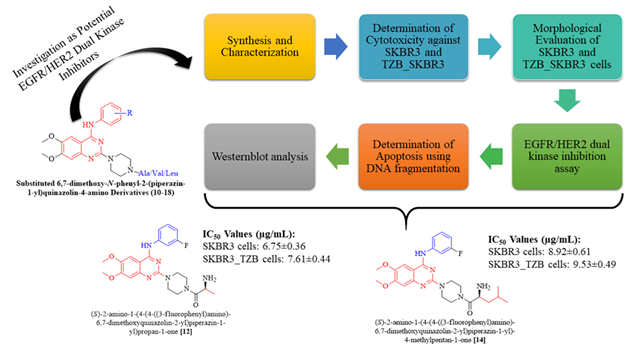
Abstract In this study, we synthesized, characterized, and evaluated the cytotoxicity and dual kinase inhibition of novel substituted quinazoline derivatives in HER2-positive SKBR3 and trastuzumab-resistant SKBR3 (TZB_SKBR3) breast cancer cell lines. A series of 6,7-dimethoxy-N-phenyl-2-(piperazin-1-yl)quinazolin-4-amine derivatives (compounds 1018) were synthesized and structurally characterized using standard spectroscopic techniques. Cytotoxicity assays revealed that compounds 12 and 14 exhibited the most potent anti-proliferative effects, with IC50 values of 6.75 ± 0.36 and 8.92 ± 0.61 µg/mL against SKBR3 cells, and 7.61 ± 0.44 and 9.53 ± 0.49 µg/mL, respectively, against TZB_SKBR3 cells. These values were comparable to or lower than that of TZB, which showed reduced potency against TZB_SKBR3 (IC50 = 25.89 ± 1.34 µg/mL) compared to SKBR3 (IC50 =7.58 ± 0.42 µg/mL), indicating acquired resistance. At 25 µg/mL, compound 12 reduced SKBR3 and TZB_SKBR3 cell viability to 4.89% and 6.39%, respectively, whereas compound 14 reduced viability to 5.74% and 7.81%, outperforming TZB in TZB_SKBR3 cells (55.63% viability at the same concentration). Morphological assessment revealed hallmark apoptotic changes, including cell shrinkage and membrane blabbing in both SKBR3 and TZB_SKBR3 cells treated with 12 and 14. EGFR/HER2 kinase inhibition assays showed that compounds 12 and 14 significantly inhibited both the kinases in a dose-dependent manner. Compound 12 exhibited superior HER2 inhibition, reaching nearly complete inhibition at 500 nM, which is comparable to or exceeding that of lapatinib, a standard dual inhibitor. DNA fragmentation analysis confirmed apoptotic cell death, and western blot analysis showed decreased phosphorylation of EGFR and HER2, along with the upregulation of apoptotic markers in both cell lines following treatment with compounds 12 and 14. These results highlight compounds 12 and 14 as promising dual EGFR/HER2 inhibitors with potent cytotoxic activity against both TZB-sensitive and TZB-resistant HER2-positive breast cancer cells.

In Silico Discovery of Natural Inhibitors against New Delhi Metallo-β-Lactamase-1: A Step towards Combating Superbug Resistance

Pages 981-993

https://doi.org/10.48309/chemm.2025.526024.1966

P Ramesh, Saravanan Govindaraj, Malarkodi Velraj, Kiruthiga Natarajan, Magendran Rajendiran, P. Shanmugasundaram, P Maheswari, P Balaji

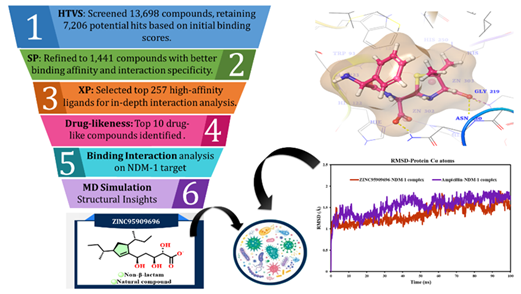
Abstract The emergence of New Delhi metallo-β-lactamase-1 (NDM-1) leads to a significant global health threat due to its ability to hydrolyze a broad range of β-lactam antibiotics, including carbapenems, leaving few alternatives for therapy. Therefore, identifying non-β-lactam inhibitors is crucial for combating NDM-1-mediated resistance. In this study, a multi-tiered virtual screening approach was employed against a library of 57,423 natural compounds from the Traditional Chinese Medicine Database@Taiwan. Structure-based virtual screening, including High Throughput Virtual Screening (HTVS), Standard Precision (SP), and extra-precision (XP) docking protocols, was performed using the Schrödinger suite. Drug-likeness was evaluated using Lipinski’s Rule of Five and Jorgensen’s Rule of Three, leading to the identification of ten promising hits. Among them, ZINC95909696 demonstrated a more favorable binding affinity of -10.041 kcal/mol, outperforming the co-crystallized β-lactam antibiotic ampicillin (-7.087 kcal/mol). Binding interaction analysis reveals hydrogen bonding with Asn220 and Lys211, along with coordination with the catalytically essential Zn² ion (Zn302), highlighting its potential as a non-β-lactam-based NDM-1 inhibitor. A 100 ns molecular dynamics simulation further confirmed the stability of the ZINC95909696–NDM-1 complex, as reflected by minimal fluctuations in RMSD and RMSF profiles. These results highlight ZINC95909696 as a compelling lead candidate for developing non-β-lactam therapeutics targeting NDM-1 β-lactamase.