7.4 (Q1)
CiteScore2024
Q2
Web of Science
Volume & Issue: Volume 10, Issue 2, February 2026, Pages 112-222 
Number of Articles: 8

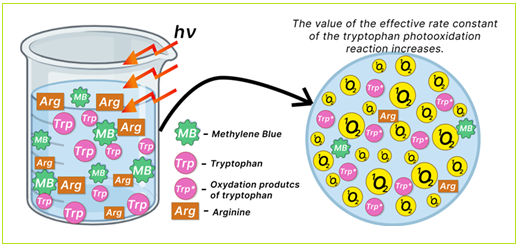
Effect of Arginine on the Kinetics of Singlet Oxygen Photogeneration in the Presence of Photoditazine, Rose Bengal, and Methylene Blue Solubilized with Polyvinylpyrrolidone

Pages 112-122

https://doi.org/10.48309/chemm.2026.545337.2011

Nadezhda Aksenova, Valeriya Kardumyan, Anastasia Kuryanova, Tatiana Ivanova, Ilya Shershnev, Marina Savko, Olga Sadykova, Nicolay Glagolev, Peter Timashev, Anna Solovieva

Abstract The effect of arginine (Arg) on the efficiency of singlet oxygen photogeneration (determined by the intensity of 1O2 luminescence and the rate of tryptophan photooxidation) in the presence of photoditazine (PDZ), methylene blue (MB), and rose bengal (RB) solubilized with polyvinylpyrrolidone (PVP) was studied. It was demonstrated that the efficiency of the tryptophan photooxidation catalyzed by MB increases in the presence of arginine or arginine with PVP. A contrasting behavior was observed for rose bengal (RB) and photoditazine (PDZ), where arginine reduced the photooxidation rate. As shown in this work, this effect may be associated with a slight decrease in the photocatalytic activity of photosensitizers (PS) due to the interaction between chlorin or RB with arginine. It is suggested that complex systems PS-Arg-Trp or PS-Arg-Trp-PVP are formed, in which PS can be associated with Arg, Trp and PVP. But for RB and PDZ the addition of arginine and PVP together resulted in the enhancement of the photooxidation rate constant keff compared to RB or PDZ alone. This effect may be associated with the formation of complex systems PS-Arg-Trp or PS-Arg-Trp-PVP, in which PS can be associated with Arg, Trp and PVP.
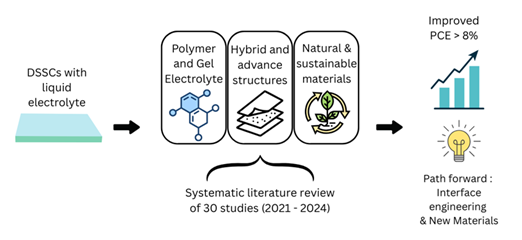
Solid-State Electrolyte in Flexible Dye-Sensitized Solar Cells: A Systematic Review

Pages 123-139

https://doi.org/10.48309/chemm.2026.531274.1975

Nor Zafirah Rashid, Siti Nur Azella Zaine

Abstract The inherent limitations of liquid electrolytes - including leakage, volatility, and thermal instability - have driven the development of solid-state electrolytes (SSEs) for flexible dye-sensitized solar cells (DSSCs). This systematic review evaluates recent advances (2021-2024) in SSE technologies through comprehensive analysis of 30 peer-reviewed studies identified via PRISMA methodology across Scopus and Web of Science. Three key innovation pathways emerge: (1) polymer/gel electrolyte formulations achieving ionic conductivities up to 15.7 mS/cm, (2) hybrid architectures incorporating nanomaterials and liquid crystals, and (3) bio-derived electrolytes from sustainable sources. While maximum reported power conversion efficiencies reach 10.34% in optimized systems (average 7.2±1.8% across studies), critical challenges remain in ion transport kinetics (typically 1-10 mS/cm) and manufacturing scalability. The analysis identifies interfacial engineering and novel composite materials as priority research directions to bridge the performance-reliability gap for commercial deployment. These findings provide a strategic roadmap for developing next-generation flexible photovoltaics that combine high efficiency (>8% target) with mechanical durability.
 

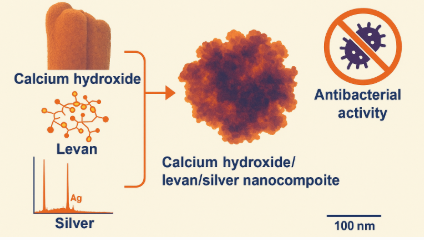
Optimize the Synthesis of Calcium Hydroxide/Levan/Silver Nanocomposite as an Antibacterial Agent

Pages 140-153

https://doi.org/10.48309/chemm.2026.512857.1918

Mohsen Safaei, Sabah Etemadi, Reza Hatam, Atefeh Khavid, Atena Karimi, Douglas Law, Ling Shing Wong, Mostafa Goodini

Abstract Antimicrobial resistance (AMR) has become a worrisome problem due to the rapid increase in AMR phenotypes. This research aimed to investigate the antibacterial properties of calcium hydroxide/levan/silver nanocomposite against Enterococcus faecalis (E. faecalis) biofilm under in vitro conditions. In this study, nine experiments were designed to evaluate the antibacterial effects of synthesized nanocomposites against the oral pathogen E. faecalis using the Taguchi method. In these tests, three factors, which included calcium hydroxide nanoparticles, biopolymer levan and silver nanoparticles, were investigated at three different levels to determine the best ratio with the highest antibacterial activity. The nanocomposite synthesized under test condition 5, including calcium hydroxide (50 mg/mL), levan (0.5 mg/mL) and silver (4 mg/mL), completely inhibited the growth of E. faecalis bacteria. Analysis showed that the nanocomposite and its components had a desirable structural and chemical composition, making it an effective antibacterial agent.

Obtaining Sodium Aluminosilicate from Rice Husk

Pages 154-163

https://doi.org/10.48309/chemm.2026.543429.2008

Nurbol O. Appazov, Meruyert Tolegenkyzy, Guldina E. Shudabay, Anel Serikkul, Neeraj Kumar, Sergiy Lyubchyk, Ziyada Zh. Appazova, Marat I. Syzdykbayev, Nurlybek A. Akhataev, Esenzhol A. Nazarov, Bakytbek B. Abzhalelov, Gulzat Sh. Askarova, Assylkhan A. Shomantayev, Guldana S. Dairbekova, Artem L. Gushchin, Indira D. Yespanova, Dinara Zh. Niyazova, Rakhymzhan A. Turmanov, Rakhmetulla U. Zhapparbergenov, Roza A. Narmanova

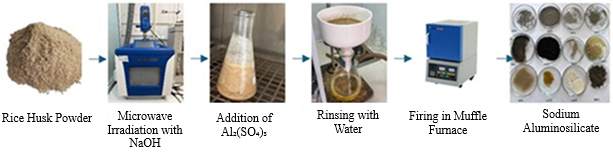
Abstract This work addresses the processing of large-scale agricultural waste – rice husk, which is utilized as a source of silicon for the synthesis of sodium aluminosilicate. A method for producing sorbents, in particular an aluminosilicate adsorbent for the purification of natural and wastewater in various industrial sectors, is described. As a result of mixing 50 ml of a saturated aluminum sulfate solution with sodium silicate (obtained by microwave irradiation of a mixture of 130 ml of 1 M sodium hydroxide solution with 10 g of ground, distilled water-washed, and air-dried rice husk), a precipitate is formed. Subsequent thermal treatment of this precipitate at different temperatures yields sorbents with varying sorption characteristics. This method of producing sodium aluminosilicate from rice husk is efficient and environmentally sustainable, enabling the utilization of agricultural waste while obtaining valuable adsorbents with high performance.

Synthesis, Characterization, Antioxidant, and Antimicrobial Evaluation of Novel (E)-4-(Substituted Benzylideneamino)phenol Derivatives Featuring Heteroaryl and Aryloxy Substituents

Pages 164-179

https://doi.org/10.48309/chemm.2026.551489.2018

Mohammad Murwih Alidmat, Moeen Fuad Dababneh, Abdallah Alshhab, Mamoon Alokour, Hussam A. Al Saoud, Raneem Waleed, Razan Younis

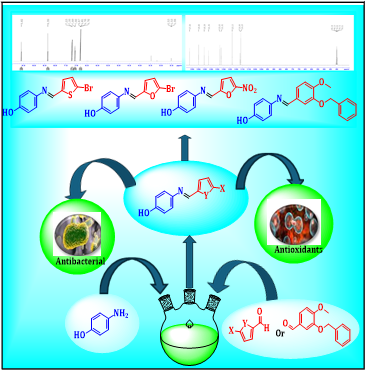
Abstract In the present study, four 4-aminophenol derivatives, (E)-4-(((5-bromothiophen-2-yl)methylene)amino)phenol, (E)-4-(((5-bromofuran-2-yl)methylene)amino)phenol, (E)-4-(((5-nitrofuran-2-yl) methylene) amino)phenol, and 4 (E)-4-((3-(benzyloxy)-4-methoxybenzylidene) amino)phenol, were synthesized and characterized by FT-IR,  1H-NMR, and  13C-NMR. The synthesized compounds were tested for antimicrobial (Gram-positive and Gram-negative bacteria) and antioxidant activities. Compounds G2 and H2 showed moderate activity against Staphylococcus aureus compared to the standard Novobiocin. In contrast, compounds E2, F2, and H2 exhibited medium-range activity against Pseudomonas aeruginosa, while only compound H2 showed medium-range activity against Escherichia coli. The newly synthesized compounds showed significant antioxidant activity (72.5% ± 0.43), (67.4% ± 0.68), (77% ± 1.03), and (60% ± 0.73) compared to ascorbic acid (76% ± 0.30). The present study delineated the broad-spectrum antimicrobial and antioxidant activities of the synthesized compounds.

Computational Evaluation of Rhizophora mucronata Root and Stem Bark Metabolites as Modulators Pigmentation via Frizzled Receptors

Pages 180-196

https://doi.org/10.48309/chemm.2026.543207.2005

Dian Ardiana, Lukman Ariwibowo, Eko Riyanto, Ersanda Nurma Praditapuspa, Fitri Handajani, Lestari Dewi

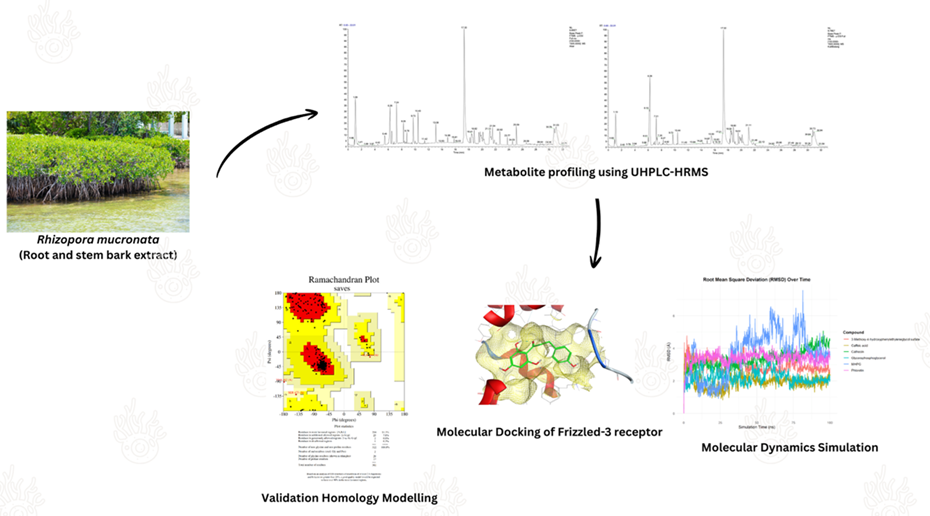
Abstract Pigmentation disorders are often associated with dysregulation of the Frizzled signaling pathway. Natural metabolites from the mangrove species Rhizophora mucronata have been reported to contain bioactive compounds with therapeutic potential. However, their role as modulators of Frizzled receptors remains largely unexplored. In this study, an integrated computational approach was employed, encompassing metabolite profiling, homology modeling, molecular docking, and molecular dynamics simulations. Metabolite profiling of R. mucronata root and stem bark extracts identified 93 and 63 compounds, respectively, from which 29 and 19 compounds were selected based on match score and relevance. A homologous model of the Frizzled-3 (FZD3) receptor was constructed and validated using Ramachandran plot analysis. Molecular docking and MMGBSA analyses identified six key metabolites catechin, phloretin, glycerophosphoglycerol, caffeic acid, coniferyl alcohol, and 3-methoxy-4-hydroxyphenylethyleneglycol sulfate as potential FZD3 modulators. Among them, catechin exhibited the most favorable binding free energy (-56.27 kcal/mol), followed by phloretin (-53.99 kcal/mol), glycerophosphoglycerol (-52.40 kcal/mol), caffeic acid (-46.11 kcal/mol), and 3-methoxy-4-hydroxyphenylethyleneglycol sulfate (-45.61 kcal/mol), whereas MHPG showed the least favorable binding (-36.44 kcal/mol). Molecular dynamics simulations confirmed complex stability through minimal RMSD fluctuations, consistent Rg values, and persistently negative MMGBSA energies. Specifically, caffeic acid and phloretin maintained stable hydrogen bonding and hydrophobic interactions within the FZD3 binding pocket, suggesting their potential role in modulating receptor conformation and signaling. Overall, this study highlights R. mucronata root and stem bark metabolites as promising natural modulators of Frizzled receptors, particularly FZD3, which plays a crucial role in pigmentation regulation. These findings provide a solid computational foundation for future in vitro and in vivo validation, supporting the potential of mangrove-derived compounds in the development of targeted pigmentation therapies.

Targeted Anticancer Drug Discovery from Borassus flabellifer Fruit Peel Extract: A Molecular Mechanism Study

Pages 197-211

https://doi.org/10.48309/chemm.2026.543402.2006

Suko Hardjono, Ersanda Nurma Praditapuspa

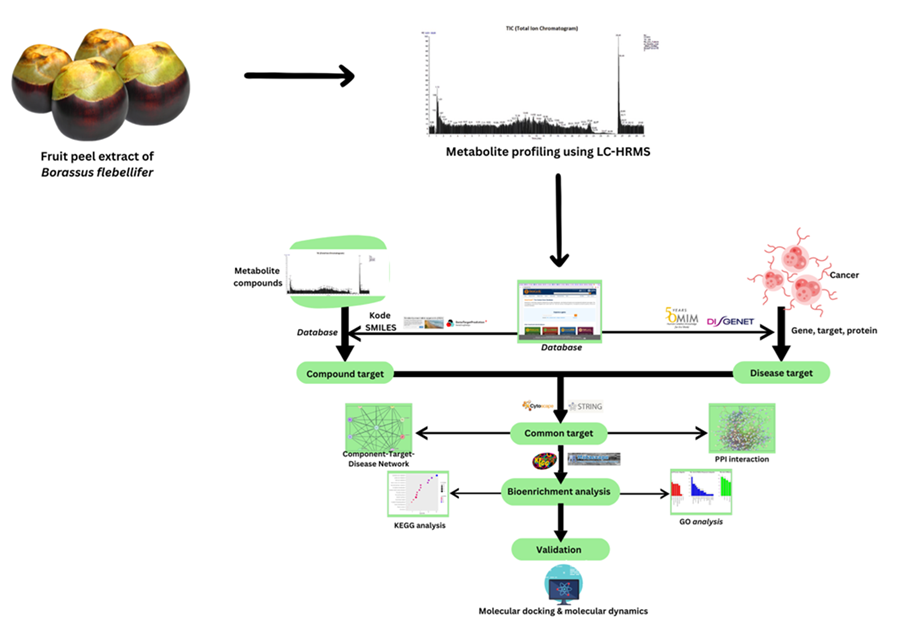
Abstract Cancer remains one of the leading causes of mortality worldwide. Conventional treatments, such as chemotherapy and radiotherapy, are often limited by severe side effects and low selectivity toward healthy cells. Consequently, natural metabolites explored through in silico approaches offer promising opportunities to discover safer anticancer agents. Metabolite profiling of the ethanolic extract of palmyra (Borassus flabellifer) fruit peel identified 80 metabolites, with 55 compounds showing a match score of ≥80%. These 55 compounds were further analyzed in silico for their potential biological activity. Network pharmacology analysis predicted molecular targets associated with breast cancer, revealing p53 as the central hub with the highest degree value, followed by AKT1 and EGFR as key nodes. Candidate metabolites were then evaluated against mutant p53 (PDB ID: 2VUK) using molecular docking, followed by 100 ns molecular dynamics (MD) simulations and MM-GBSA binding free energy analysis to validate the stability and affinity of ligand–protein interactions. Docking results indicated that 7-methoxy-3′,4′-dihydroxyflavonone (–6.95 kcal/mol) displayed affinities comparable to the reference stabilizing ligand (–7.18 kcal/mol). MD simulations confirmed stable interactions with key residues surrounding the Y220C mutation pocket, supported by consistent RMSD and RMSF profiles throughout the 100 ns trajectory. Furthermore, MM-GBSA analysis highlighted 7-methoxy-3′,4′-dihydroxyflavonone (–52.11 kcal/mol) as exhibiting stronger binding free energy than both the reference ligand (–51.40 kcal/mol). Overall, the integration of metabolite profiling, network pharmacology, molecular docking, MD, and MM-GBSA analyses suggests that 7-methoxy-3′,4′-dihydroxyflavonone from palmyra fruit peel represents a potential stabilizer of mutant p53 (Y220C), offering a promising strategy for targeted anticancer therapy. These findings warrant further in vitro and in vivo validation.

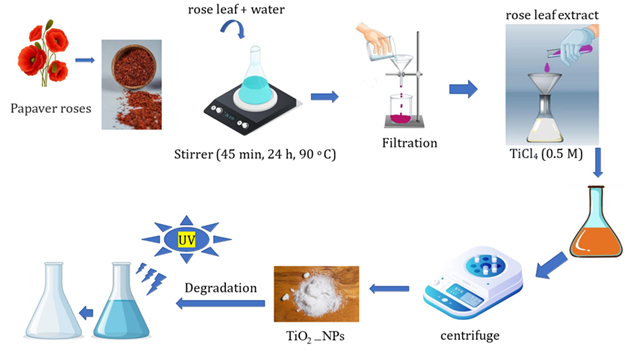
Plant-Based Synthesis of TiO2-NPs Using Papaver Rhoeas Leaf Extract: A Study of Photocatalytic and Antibacterial Activities

Pages 212-222

https://doi.org/10.48309/chemm.2026.536580.1995

Hasan Ali Hosseini, Mohammad Hakimi, Behrouz Elhami Nezhad, Tahmineh Kohanfekr

Abstract This study involved synthesizing titanium dioxide nanoparticles (TiO2-NPs) using an aqueous extract of Papaver rhoeas leaves, which acted as a stabilizing agent in a green synthesis process. Multiple analytical techniques were used to characterize the resulting TiO2-NPs, including ultraviolet-visible, FT-IR, and X-ray diffraction (XRD) spectroscopy, along with Field Emission Scanning Electron Microscopy (FESEM). The XRD results verified both the purity and anatase crystal structure. Using the Debye-Scherrer formula, the crystal size was determined to be 17.03 nm. Electron microscopy revealed particle dimensions ranging from 40 to 60 nm. The photocatalytic activity of TiO2-NPs was evaluated by the degradation of methylene blue dye under UV light in an alkaline environment (pH = 9). The results demonstrated that 85% of the dye degradation was achieved under UV light within 120 min, indicating excellent photocatalytic performance. Nonetheless, the biosynthesized TiO2-NPs showed no inhibitory effects against E. coli and S. aureus. The green synthesis approach and effective photocatalytic performance highlight the potential of Papaver rhoeas leaf-stabilized TiO2-NPs as eco-friendly photocatalysts for dye degradation, but their lack of antibacterial activity indicates that further optimization or modification may be required for antibacterial applications.