7.4 (Q1)
CiteScore2024
Q2
Web of Science
Volume & Issue: Volume 8, Issue 1, January 2024, Pages 1-71 
Number of Articles: 5

Efficient Catalytic Synthesis of Xanthenes with Copper Immobilized on Amine-Modified NaY

Pages 1-22

https://doi.org/10.48309/chemm.2024.424058.1737

Mohammadreza Azizi Amiri, Hamidreza Younesi, Haniye Kazemi Aqmashhadi, Ghasem Firouzzadeh Pasha, Sakineh Asghari, Mahmood Tajbakhsh

Abstract The purpose of this article is to describe the synthesis of copper-amine complexes on nano NaY zeolite (Cu@NNPS-NaY), as a highly efficient, reusable, and environmentally friendly catalyst for the xanthenes synthesis. The Cu@NNPS-NaY catalyst was prepared from the reaction of silane-bonded nano NaY Zeolite (CPS-NaY) with [2-({3-[(2-aminoethyl) thio]propyl} thio)ethyl]amine (NN) followed by immobilizing copper ions onto the NNPS-NaY surface. The catalyst structure was characterized using FT-IR, XRD, TGA, EDS, DLS, SEM, TEM, ICP, and elemental analyses. The bonded long-chain amine including heteroatoms on the zeolite surface improved its catalytic activity and homogeneity, making it more capable of coordinating with copper ions. Synthesis of xanthenes was performed in the presence of Cu@NNPS-NaY catalyst (30 mg) in EtOH (10 mL) at 60 °C within 10-60 minutes resulting in product yields of 84-97%. The prepared catalyst can be easily recovered by centrifugation and reused for at least twelve consecutive runs with no significant loss of its catalytic activity. Besides the simplicity of catalyst recovery and reusing, the method is easy to set up and versatile, making it an environmentally friendly way to prepare titled heterocycles. Based on the results of this study, other useful heterocycles could be synthesized under eco-friendly conditions using this catalytic system.

Construction of a Novel Magnetic Nanomaterial, and its Utility as an Effectual Catalyst for the Fabrication of 1, 8-Dioxo-Octahydroxanthenes

Pages 23-36

https://doi.org/10.48309/chemm.2024.422175.1733

Abdolkarim Zare, Fatemeh Mostaghar

Abstract At first, construction and characterization of a novel magnetic nanomaterial titled N1-(Si-pr)-(N1,N1,N4,N4-tetramethylbenzene-1,4-diaminium) chloride dihydrogen phosphate grafted on Fe3O4@SiO2 (STCDFS) have been described. The characterization has been accomplished by EDX, elemental mapping, FE-SEM, FT-IR, XRD, and VSM analyses. In continue, effectual and quick fabrication of 1,8-dioxo-octahydroxanthenes form aryl aldehydes and dimedone using STCDFS in solvent-free conditions has been reported. The xanthenes were acquired in 92-98% in 5-10 min. Moreover, the catalyst was reusable for one time without remarkable decrement in its performance.

Fabrication of Manganese Dioxide Nanoparticles in Starch and Gelatin Beds: Investigation of Photocatalytic Activity

Pages 37-46

https://doi.org/10.48309/chemm.2024.424921.1739

Mohammad Hakimi, Hasan Ali Hosseini, Behrouz Elhaminezhad

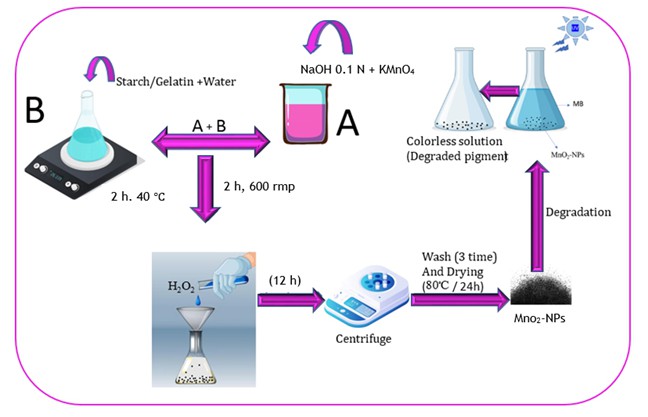
Abstract This study utilized potassium permanganate and natural polymers starch and gelatin as stabilizing agents to the green fabrication of manganese dioxide nanoparticles MnO2-NPs for photocatalytic degradation of methylene blue. MnO2-NPs were characterized using UV-Vis spectroscopy, FT-IR, and X-ray diffraction spectroscopy, as well as Field Emission Scanning Electron Microscopy (FESEM). XRD confirmed the amorphous nature and purity of the nanoparticles. The photocatalytic activity of MnO2-NPs was examined by the degradation of methylene blue dye under neutral pH. Results showed 95% dye degradation within 45 minutes under repeat cycling, indicating the excellent photocatalytic performance. The green synthesis method and effective photocatalytic activity demonstrate of starch and gelatin-stabilized MnO2-NPs as sustainable photocatalysts for degradation of organic pollutants. The produced potential in the two beds with starch and gelatin was examined.

Phytochemical Evaluation of Aerial Parts of Eryngium Billardieri growing in Iran

Pages 47-57

https://doi.org/10.48309/chemm.2024.427947.1740

Keyvan Sardari, Abbas Delazar, Hadi Ghanbari, Solmaz Asnaashari, Parina Asgharian

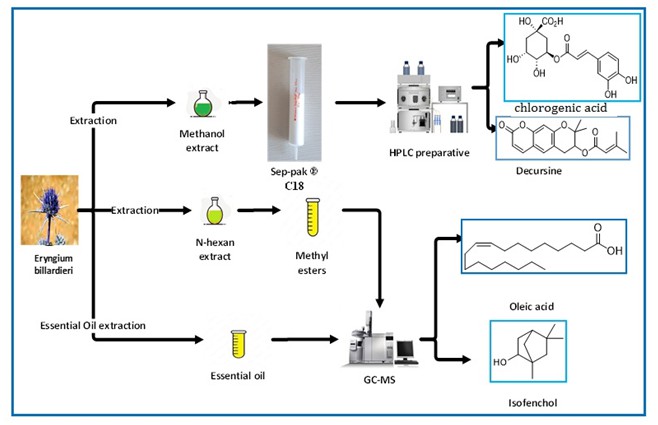
Abstract Introduction: Eryngium plants represent the most diverse species within the Apiaceae family, with approximately 250 species. Numerous species of Eryngium, including Eryngium campestre and E. foetidum, have been used for centuries in traditional medicine. E. billardieri was selected for this study due to its purported applications in traditional Iranian medicine, as well as the absence of prior research on the chemical constituents within this plant.
Materials and methods: The aerial parts of the plant were extracted by n-hexane, dichloromethane, and methanol (MeOH) by a Soxhlet apparatus. The MeOH extract was exposed to C18 Sep-Pak fractionation cartridge by a step gradient of MeOH-H2O. Further purification was performed by preparative HPLC and the purified compounds were separated to be elucidated with H NMR and C NMR results. The essential oil was obtained by the Clevenger apparatus. The n-hexane extract was transformed into methyl ester through a process involving saponification and esterification and the obtained essential oil and fatty acids were analyzed using a flame ionization detector (FID) and a DB-1 capillary column.
Results: The 40% methanol extract led to the identification of two compounds such as decursine and Chlorogenic acid. The essential oil composition analysis yielded the following results: approximately 92% of the essential oil compounds were identified. The predominant compounds were isofenchol (36.85%), germacrene D (7.69%) and gurjunene (6.67%). The analysis of methyl esters revealed the presence of four fatty acid compounds: oleic acid with 27.2%, elaidic acid with 6.91%, palmitic acid with 4.62%, and stearic acid with 2.55% of the total area.
Conclusion: Two substances (decursine and chlorogenic acid) were isolated from the methanol extract, and oleic acid was isolated and identified from the n-hexane extract. Concerning the phytochemical potential inherent in this genus and specifically in this plant, further extensive research in this domain is warranted.

Chemistry of the Behaviors, Assessing the Effect of Testosterone, Cortisol, Progesterone and Estradiol on Financial Risk Taking using Machine Learning Regression Methods

Pages 58-71

https://doi.org/10.48309/chemm.2024.430299.1745

Asghar Beytollahi, Fariba Marashy

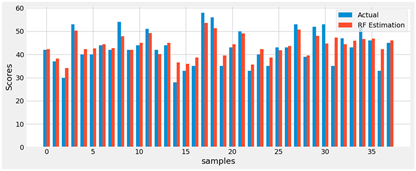
Abstract Human behavior is the consequence of the interactions between physiological and biological factors. On the other hand, biochemical hormones are crucial indicators that widely impress the human life. Financial behaviors are the same as risk attitude which affect the economic and social quality of human life, and are also driven by the hormones which are biochemicals that circulate with the blood and govern the targeted parts of the body, mostly the brain. Cortisol, Testosterone, Progesterone, and Estradiol are some of the hormones that shape the human life with the extensive impact they have on emotional conditions and obviously change the individual tendency to financial risk taking. The present study is an experimental work which assesses the effect of the four mentioned hormones levels on the financial risk taking score. The levels of these hormones are measured in the blood samples provided by 38 participants. The participants further filled a standard and reliable questionnaire which indicates the level of financial risk taking. Several regression methods of machine learning are applied to the produced database and it is concluded that the value of financial risk taking could be modeled by Testosterone, Cortisol, Progesterone, and Estradiol hormone concentrations. The statistical analysis is also performed and it is demonstrated that testosterone has a positive effect on the financial risk taking whilst the other three hormone levels are negatively associated with the financial risk taking.