7.4 (Q1)
CiteScore2024
Q2
Web of Science
Volume & Issue: Volume 6, Issue 9, September 2022, Pages 639-719 
Number of Articles: 7

Four-Component Synthesis of Polyhydroquinolines via Unsymmetrical Hantzsch Reaction Employing Cu-IRMOF-3 as a Robust Heterogeneous Catalyst

Pages 639-648

https://doi.org/10.22034/chemm.2022.340599.1511

Reza Taghavi, Sadegh Rostamnia

Abstract In this report, an IRMOF-3 was synthesized via a solvothermal method and then used as support for stabilizing Cu(II) ions. Characterization methods such as FT-IR, XRD, SEM, and BET were employed to analyze produced Cu@IRMOF-3, demonstrating that the suggested catalyst effectively conserved its structure throughout the synthesis processes. The FT-IR results indicate that the presence of the -NH2 group in the structure of the MOF helped stabilize the Cu(II) ions. The manufactured catalyst was used to prepare polyhydroquinoline derivatives which showed superior results.

Synthesis and Characterization of New Demulsifier from Natural Polymer

Pages 649-660

https://doi.org/10.22034/chemm.2022.336625.1472

Muna Abdul Jaleel Turki, Sana Hitur Awad, Sura K. Ibrahim

Abstract In this study, demulsifiers were prepared from Basra crude oil and water emulsions. This research included the preparation of new emulsifiers from natural polymers by forming a new flange base of chitosan with glyoxal. The prepared compounds were investigated using infrared spectroscopy and nuclear magnetic resonance spectroscopy as well as studied in terms of thermal stability using differential calorimetry technique. The prepared emulsifier was compared with a commercial emulsifier EC2134A, and it was shown that the prepared emulsifier is more efficient than the commercial emulsifier.

Adsorption and Photocatalytic Degradation of Crystal Violet Dye under Sunlight Irradiation Using Natural and Modified Clays by Zinc Oxide

Pages 661-676

https://doi.org/10.22034/chemm.2022.340376.1507

Zakarya Ayoub Messaoudi, Driss Lahcene, Tahar Benaissa, Mohammed Messaoudi, Brahim Zahraoui, Meriem Belhachemi, Abderrahim Choukchou-Braham

Abstract A ZnO-supported natural volcanic Algerian clay (ZnO/CNA) was synthesized through an impregnation method to prepare a photocatalytic adsorbent integrated. The discoloration of crystal violet dye (CV) from an aqueous solution was carried out using natural and modified clays via zinc oxide by adsorption and photocatalytic degradation. The materials were characterized through X-ray fluorescence spectrometer (XRF), Scanning electronic microscopy (SEM), Energy-dispersive X-ray spectroscopy (EDX), Fourier transform infrared spectroscopy (FTIR), and X-ray diffraction (XRD). The effects of diverse experimental parameters on the adsorption process efficiency were investigated. The photocatalysis process of CV was executed by the ZnO/CNA material under sunlight irradiation. The characterization results informed that ZnO nanoparticles were well dispersed on the clay surface (CNA). The adsorption experiments were well clarified via the kinetic model of pseudo-second-order and isotherm model of Langmuir with correlation coefficients (R2 > 0.99). Moreover, thermodynamic data showed that CV adsorption was endothermic, spontaneous, and physical. The adsorption capacity of CV was high utilizing ZnO/CNA material and gives 74.63 mg/g by the Langmuir equation. The photodegradation kinetics followed pseudo-1st order approximate the model of Langmuir-Hinshelwood. The discoloration efficiency with the ZnO/CNA (∼ 92%) was higher compared with the CNA (67%), clearly suggesting promoting effect of ZnO.

Design, Synthesis, Docking and Biological Study of Pyrazole-3,5-diamine Derivatives with Potent Antitubercular Activity

Pages 677-691

https://doi.org/10.22034/chemm.2022.343572.1538

Devidas C. Pawar, Sunil V. Gaikwad, Sonali S. Kamble, Priya D. Gavhane, Milind V. Gaikwad, Bhaskar S. Dawane

Abstract A new series of (E)-4-((4-substitutedphenyl)diazenyl)-1H-pyrazole-3,5-diamine derivatives were synthesized by using greener poly ethylene glycol-400 as a reaction solvent. The drug resistance capacity and growing incidence of Mycobacterium tuberculosis infections have been increasing day by day. There is high demand for the synthesis of multidrug resistance anti-tubercular drugs. Herein, all the newly prepared ligand was subjected to the Vitro anti-tubercular activity against Mycobacterium tuberculosis against H37Rv strains with, pyrazinamide, isoniazid, ethambutol, and streptomycin as the standard drugs. The compounds 4a, 4b and 5a showed excellent activity while 5b exhibit moderate activity against Mycobacterium tuberculosis. Further, the molecular docking was done with an enzyme PDB:1G3U. The ligand thymidine monophosphate was completed in the crystal structure of mycobacterium tuberculosis, while Mtb Pks13 Thioesterase domain in complex with inhibitor TAM16 with PDB:5V3Y Crystal Structure showed excellent docking results. These newly synthesized derivatives of pyrazole may be useful in the development of new anti-tubercular agents.

Improving Rheological and Sensory Properties of Flour and Laboratory Cake Using Different Concentrations of Guar Gum

Pages 691-698

https://doi.org/10.22034/chemm.2022.344394.1548

Raafat A. Abu-Almaaly

Abstract The current study was conducted to show the effect of adding guar gum on improving the rheological and sensory properties of flour and laboratory cakes. Turkish flour of the brand BESLER UN was used, guar gum was added in concentrations of 0.5%, 1% and 1.5% in treatments T1, T2 and T3, fourth treatment. T was left without addition to the control group. Chemical composition analysis of the flour was carried out before use, conforming to the Turkish and Iraqi standards for multi-purpose wheat flour. The addition of guar gum did not significantly affect the moisture and ash content, which amounted to 9.6% and 0.64%; values ​​of dry and wet gluten and gluten index were 8,14, 24.5 and 91.4, respectively, having a clear effect on the relatively good extraction rate of flour 72%. Adding guar gum significantly affected the rheological properties of cake dough such as oil absorption and emulsification, reaching 2.66 and 2.28, compared with the control by 2.53 and 1.35. As for the water absorption of all treatments, there were no significant differences between them and the control, sensory characteristics of the cake, including taste and mouth feel, affected by the increase in the addition of guar gum, from 6.86 and 6, 57 respectively in control to 8.54 and 8.56 in T3 treatment (1.5% guar gum). The characteristics of color, texture and smell did not show significant differences from the control when adding guar gum for all treatments.

Assessment of MoTiO3/GO Integrated Photocatalyst for Converting CO2 to Methanol

Pages 699-709

https://doi.org/10.22034/chemm.2022.339764.1502

Siamak Shehni, Seyed Mostafa Tabatabaee Ghomscheh

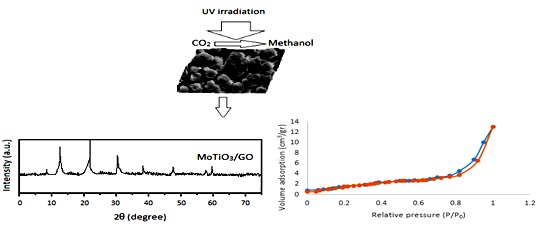
Abstract In this study, the citric acid-assisted sol-gel method was used for perovskite MoTiO3/GO nanocomposites preparation. The prepared samples were characterized by SEM, BET, FT-IR, and XRD analysis. The photocatalytic activity of MoTiO3/GO was evaluated by converting CO2 under visible light irradiation to methanol. Results indicated that MoTiO3/GO (1.5wt.%) exhibited significant methanol production up to 303.7 µmol g cat-1 after visible light irradiation lasting for 4 hr.  Therefore, it can be said that MoTiO3 / GO is a suitable candidate for the efficient conversion of CO2 to methanol.

Bio-Based Polymers Derived and Modified on Cis-1,3,4,6-Tetrahydrophthalimide and Its Applications

Pages 710-719

https://doi.org/10.22034/chemm.2022.344357.1546

Muna I. Khalaf, Asmaa Mohammed Noori Khaleel

Abstract In the current work, N-substituted cis-1,3,4,6-tetra hydrophthalimide polymerized derivatives were prepared as bio-based materials. This research was carried out through the following three steps; Firstly, preparing N-alkyl cis-1,3,4,6-tetra hydrophthalamic acid by reacting of cis-1,3,4,6-tetra hydrophthalimide salt with (benzyl chloride, PVC, adipoyl chloride, co-poly vinyl acetate chloride and poly acyloyl chloride) respectively producing, N-alkyl tetra hydro phthalimide. Furthermore, the next step includes preparing N-creatinyl tetrahydro phthal imide, and followed by the polymerization step of the prepared unsaturated compounds throughutilizing (BPO) as initiator alongside the heating. Several techniques were used to characterize the prepared compounds such as recording the melting points and softening point as well as infrared spectroscopy (FTIR). However, some of the prepared compounds were characterized by using proton nuclear magnetic resonance 1HNMRand studied thermally via differential scanning calorimetric technique DSC.