7.4 (Q1)
CiteScore2024
Q2
Web of Science

 Journal date created

2017

Google Scholar (h-index)

37

Google Scholar (i10-index)

219

Google Scholar Citations

6601

Impact Factor 2023

3.5

Quality Rank in JCR List (2023)

Q2

CiteScore 2024

7.4

CiteScore Tracker 2025

10.2

Scimago Quartile 2024

Q2

SJR 2024

0.726

SNIP 2024

1.404

Number of Volumes 10
Number of Issues 76
Number of Articles 552
Number of Contributors 1,695
Article View 852,306
PDF Download 426,774
View Per Article 1544.03
PDF Download Per Article 773.14
 
Number of Submissions 1,110
Rejected Submissions 462
Rejection Rate 42
Accepted Submissions 561
Acceptance Rate 51
Time to Accept (Days) 58
Number of Indexing Databases 22
Number of Reviewers 8641


Chemical Methodologies (Chem. Methodol.) was launched in 2017 by Sami Publishing Company with the cooperation "Iranian Chemical Science and Technologies Association". This double-blind peer-reviewed and indexed journal aims to provide a platform for researchers around the world to share their latest findings in all fields of Chemistry and Biochemistry. Experimental, theoretical, and applied original research studies in all fields of chemistry and biochemistry are welcomed for submission. The journal is Open Access and all articles published in this journal are freely available for readers online without a subscription and authors retain the copyright of their work. Researchers, Scientists, and Readers do not need permission to use, download and cite of all articles that are published in the journal (with mention of the exact source). The average time between submission and final decision is 6-8 weeks and the average time between acceptance and publication is 2-4 weeks.

Chemical Methodologies published monthly online and in print (12 issues per year). Related subjects: All fields of chemistry & Biochemistry 

Chemical Methodologies has been indexed in the Web of Science (JCR);  with the Q2 category and also it is indexed in the Scopus: CiteScore 2024=7.4, Q1 (Scopus, 80%), Q2 (Scimago, SJR 2024=0.726) 

Categories of the journal in the Scopus:

  1. Chemistry (Organic Chemistry), Rank: 42/212, Percentile=80%, Q1
  2. Chemistry (Physical and Theoretical Chemistry), Rank: 42/187, Percentile=77%, Q1

GC-MS-Based Phytochemical Analysis, In-depth ADMET Screening and Molecular Docking Targeting EGFR for Anticancer Potential

Pages 465-488

https://doi.org/10.48309/chemm.2026.564116.2061

Ramana Hechhu, Karthickeyan Krishnan, Venkata Ramana Singamaneni, Pericharla Venkata Narasimha Raju, Phanindra Erukulla, Krishna Vamsi Kandimalla, Ramenani Hari Babu, Nithin Vidiyala

Abstract Qurs-e-Ziabetus Khas is a classical unani herbal-mineral formulation traditionally prescribed for diabetes; however, its phytochemical composition and anticancer potential remain underexplored. This study aimed to standardize QZKH and elucidate its bioactive profile with a focus on epidermal growth factor receptor (EGFR) kinase–targeted activity. QZKH tablets were evaluated for organoleptic, physicochemical, and microbial parameters, followed by preliminary phytochemical screening, gas chromatography-mass spectrometry (GC–MS) based profiling, molecular docking against EGFR (PDB ID: 7SI1), and in silico ADMET analysis. Quality control studies confirmed acceptable pH (6.3–6.8), moisture, ash, and extractive values and the absence of foreign matter, heavy metals, pesticides, and pathogenic microbes, indicating a safe and standardized formulation. Phytochemical tests revealed carbohydrates, amino acids, fats and oils, cardiac and anthraquinone glycosides, saponins, alkaloids, phenolics, tannins, and flavonoids, supporting a strong antioxidant and metabolic regulatory potential. GC–MS analysis identified aromatic acids (benzeneacetic, hydrocinnamic), fatty acids (dodecanoic, tetradecanoic, oleic), cyclic dipeptides (cyclo (Pro–Ala), 3,6-diisopropylpiperazine-2,5-dione, phenylalanyl-leucine), long-chain amide (erucamide), and ursolic acid derivatives as key constituents. Docking studies showed that urs-12-en-23-oic acid, 3-(acetyloxy)-, methyl ester (–7.2 kcal/mol) and phenylalanyl-leucine (–5.8 kcal/mol) exhibited higher binding affinity to EGFR than the native ligand, stabilized by multiple hydrogen bonds and hydrophobic interactions. ADMET predictions highlighted cyclo (Pro–Ala), 3,6-diisopropylpiperazine-2,5-dione, hydrocinnamic acid, and benzeneacetic acid as drug-like, safe candidates with favorable pharmacokinetic and toxicity profiles. Collectively, these findings substantiate QZKH as a chemically rich, standardized formulation with promising EGFR-targeted anticancer potential, warranting further validation.

Molecular Docking and Pharmacokinetic Evaluation of Terpenoid Compounds from Ramie (Boehmeria nivea (L.) Gaudich.) Leaves as Potential Natural Agents for Inflammatory Bowel Disease

Pages 489-503

https://doi.org/10.48309/chemm.2026.559345.2042

Rahadian Zainul, Iffat Syafiqoh Afif, Khang Wen Goh, Asri Peni Wulandari, Ayu Wandira, Sri Benti Etika, Budhi Oktavia, Novia Nelza

Abstract Boehmeria nivea (L.) Gaudich (Ramie) is traditionally used in Indonesia as an anti-inflammatory agent, yet the molecular basis of its terpenoid activity against inflammatory bowel disease (IBD) remains poorly understood. This study aimed to characterize the pharmacokinetic properties and molecular interactions of five terpenoid compounds—Muscone, Navenone A, Jasmone, Sedanolide, and Curcumene—identified from Ramie leaves, against the IBD-related target protein CEACAM6 (PDB ID: 4Y8A) using an integrated in silico approach combining drug-likeness screening, ADMET prediction, and molecular docking. Tofacitinib, a clinically approved JAK inhibitor for IBD, was used separately as a reference (positive control) for comparison, but not classified as a terpenoid compound. All five terpenoids satisfied Lipinski’s and Veber’s criteria, showing favorable oral bioavailability, high gastrointestinal absorption, and low predicted toxicity. Docking simulations demonstrated that Muscone (-6.03 kcal/mol), Sedanolide (-5.64 kcal/mol), and Jasmone (-5.55 kcal/mol) exhibited comparable or slightly stronger binding affinities than Tofacitinib (-6.44 kcal/mol), stabilized by Zn²⁺ coordination and hydrogen bonding with catalytic residues Thr102, Glu100, and Arg39. These findings indicate that terpenoid constituents of Ramie may act as potential natural modulators of CEACAM6-mediated interactions, contributing to host-based anti-inflammatory mechanisms rather than direct enzymatic inhibition. Collectively, the results indicate that terpenoid constituents of Ramie possess multitarget anti-inflammatory potential and could serve as natural leads for IBD therapy. This research supports SDG 3 (Good Health and Well-Being) through the discovery of safer, plant-based therapeutics and SDG 12 (Responsible Consumption and Production) by promoting the sustainable utilization of local Indonesian biodiversity for biomedical innovation.

A Study of the Antioxidant and Antibacterial Effect of Dichloromethane Roots Extract of Salvia larifolia and Salvia atropatana Medicinal Plants

Pages 504-513

https://doi.org/10.48309/chemm.2026.558455.2041

Hassan Hassani, Javad Asili, Roxana Rafatpanah Baygi, Mehdi Dadmehr

Abstract Regarding to the importance of bacterial resistance to many antibiotics and due to the adverse nutritional and carcinogenic effects of many synthetic antioxidants, the discovery and development of antibacterial and antioxidant ag ents derived from plants have been of interest in recent years. This study was conducted on two species of Salvia to determine their antibacterial and antioxidant properties. The antibacterial effect of dichloromethane extract of the roots of Salvia larifolia and Salvia atropatana was studied using disk diffusion method. Additionally, three methods DPPH, FRAP, and BCB were used to evaluate the antioxidant power of the extracts. The results of this study showed that the extracts at concentrations of 40 and 80 µg/mL had the highest antibacterial and antioxidant properties, respectively. The effect of the extracts on gram-positive bacteria was greater than on gram-negative bacteria. The antioxidant power of Salvia larifolia was higher than that of Salvia atropatana in the DPPH and FRAP methods, but lower at some concentrations in the BCB method, indicating a difference in the amount of compounds present in these two species. The results of this study suggest that the studied species can be used as effective natural antibacterial and antioxidant agents in various industries.

High-Performance PES Membranes Prepared by VNIPS: Role of Brij-58 in Enhancing Surface Hydrophilicity and Antifouling Resistance

Pages 514-528

https://doi.org/10.48309/chemm.2026.562772.2051

Miftahul Arzaq, Muhammad Az-Harry, Haziqia Aulia Putri, Nasywa Humaira Nasrul, Sri Mulyati, Cut Meurah Rosnelly, Nafiu Umar Barambu, Muhammad Prayogie Aulia, Nasrul Arahman

Abstract This study investigates the modification of polyethersulfone (PES) membranes using the Brij-58 additive to enhance the hydrophilicity and antifouling performance of the resulting thin film for the separation of water pollutants. A combination of vapor-Induced phase separation (VIPS) and non-solvent induced phase separation (NIPS) methods was employed to ensure the retention of Brij-58 within the membrane matrix. SEM analysis revealed uniform pore distribution and symmetrical structure, while FTIR confirmed successful incorporation of Brij-58. The modified membrane (PB-90) exhibited improved hydrophilicity, as indicated by a reduced water contact angle from 75.31° to 55.11°. PB-90 also demonstrated the highest pure water flux (69.86 ± 1.294 L/m²·h), though with a slight decrease in mechanical strength. Performance testing showed that PB-90 had superior antifouling characteristics, with a flux recovery ratio (FRR) of 91.91% and total fouling ratio (Rt) of 52.49%, compared to the unmodified membrane (PM) with an FRR of 75.70% and Rt of 25.58%. When applied to river water filtration, PB-90 significantly reduced contaminants. These results confirm that the incorporation of Brij-58 and the VNIPS technique effectively enhance the hydrophilic and antifouling properties of PES membranes.

Design, Optimization, and Chemical Characterization of a Terbinafine Nanosponge-Based Nanogel Using a Factorial Methodological Approach

Pages 529-543

https://doi.org/10.48309/chemm.2026.564156.2062

Addanki Anusha, Annammadevi Govardhini Sayam

Abstract Terbinafine exhibits poor nail permeability, which limits its effectiveness against onychomycosis. To enhance topical delivery, a terbinafine nanosponge-loaded nanogel (TNG3-O) has been developed for sustained antifungal action. Pre-formulation studies validated drug purity and compatibility using FTIR and XRD analyses. A 3² factorial design improved the nanosponge formulation by using Eudragit RS100 and PVA. Nanosponges prepared by emulsion solvent diffusion were added to a Carbopol 940-based nanogel and tested for their physical and chemical properties, antimicrobial activity, and in vivo activity. The TNG3-O had a particle size of 177.2 nm, a zeta potential of –25.7 mV, and a drug loading of 67.5%. It had a pH of 5.71, a viscosity of 35,100 mPa.s, a spreadability of 36.5 g.cm/s, and a drug content of 93.12%, and it was stable. SEM confirmed that the nanosponges were spherical and evenly spread. TNG3-O created inhibition zones of 29 ± 0.00 mm (Candida albicans) and 30 ± 0.00 mm (Trichophyton rubrum), which was better than the marketed formulation. In vivo, TNG3-O significantly diminished fungal invasion and formation of subungual abscesses in infected guinea pigs. TNG3-O offers a stable and effective topical system with superior antifungal efficacy and is a promising approach for the management of onychomycosis.

Kinetic and Mechanistic Investigation of the Reaction between Diethyl Acetylenedicarboxylate and Phthalimide Catalyzed by Triphenylarsine in Alcoholic Media

Pages 544-555

https://doi.org/10.48309/chemm.2026.565160.2065

Halime Kord-Tamandani, Younes Ghalandarzehi

Abstract In this study, a comprehensive kinetic and mechanistic analysis was carried out for the reaction between diethyl acetylenedicarboxylate (DEAD) and phthalimide in methanolic media using UV–Vis spectroscopy. The effects of temperature, solvent environment, and the structure of dialkyl acetylenedicarboxylates on the reaction behavior were systematically examined. The kinetic data indicated an overall second-order process in which both DEAD derivatives and phthalimide contributed fractional orders close to unity. Further analysis revealed that the second stage of the transformation governs the overall rate of the reaction. Unlike reports employing triphenylphosphine (TPP), where distinct mechanistic pathways were proposed, triphenylarsine (TPA) in this system functions predominantly as an effective nucleophilic catalyst, accelerating the initial interaction and modifying the subsequent mechanistic profile. Thermodynamic parameters (ΔG‡, ΔS‡, ΔH‡, and Ea) were evaluated using temperature-dependent studies, providing deeper insight into the reaction pathway and the associated energy requirements.

Synthesis of Hollow Fiber Membrane PES-Chitosan-Mg(OH)2 as a Candidate for Hemodialysis Membrane

Pages 556-565

https://doi.org/10.48309/chemm.2026.567420.2069

Yosafat Bramantyasena Widyantaka, Sari Edi Cahyaningrum, Pirim Setiarso, Amaria Amaria

Abstract Hemodialysis is a therapy for patients with chronic kidney failure using hollow fiber membranes. The use of hollow fiber membranes has encouraged the search for optimal, effective, and biologically safe formulations. This study aims to create, characterize, review the effectiveness and safety of PES-chitosan-Mg(OH)2 hollow fiber membranes as candidates for hemodialysis membranes. The combination of these three materials is expected to improve the effectiveness and safety of hemodialysis. This membrane was made using a phase inversion method with varying concentrations of chitosan-Mg(OH)2, then tested with FTIR, SEM, contact angle testing, flux, and BSA, urea, and creatinine rejection capabilities. FTIR results showed a shift in the –OH and –NH bands, indicating hydrogen interaction between PES and chitosan, as well as Mg²⁺ coordination with the chitosan amine group. Sample F3 with a 1% chitosan content showed the most optimal results with a porosity of 50.54%, a contact angle of 68.39°, a flux of 54.39 L/m²h, BSA rejection of 96.26%, and urea and creatinine rejection of 57.74% and 48.96%, respectively. APTT, PT, and hemolysis tests confirmed good biocompatibility (<2% hemolysis). Overall, the PES–chitosan–Mg(OH)₂ membrane shows potential as an alternative material for effective and biologically safe hemodialysis applications.

Computational Insights into the Anti-Inflammatory Potential of Ocimum americanum Phytochemicals in Malaria-Associated Cytokine Dysregulation

Pages 566-585

https://doi.org/10.48309/chemm.2026.570365.2078

Nur Balqis Maulydia, Syahputra Wibowo, Josephine Elizabeth Siregar, Rinaldi Idroes, Rony Abdi Syahputra, Putri Cahaya Situmorang

Abstract Ocimum americanum is a traditionally used medicinal plant that remains pharmacologically underexplored in the context of malaria-associated inflammation. In this study, an integrated chemical and computational approach was employed to investigate the potential molecular mechanisms underlying the anti-inflammatory relevance of Ocimum americanum –derived phytochemicals. A curated set of literature-reported secondary metabolites representative of Ocimum americanum  was analyzed using network pharmacology to explore their interactions with malaria-, inflammation-, and oxidative stress–related targets. Network analysis identified a set of core regulatory targets shared across disease contexts, with functional enrichment highlighting pathways associated with cytokine-mediated signaling and redox homeostasis. Pro-inflammatory mediators, particularly interleukin-6 (IL-6) and tumor necrosis factor (TNF), emerged as central hub nodes within the protein–protein interaction network, suggesting their relevance as key molecular convergence points. To further assess mechanistic plausibility, molecular docking and molecular dynamics simulation were performed against selected hub targets. Among the evaluated phytochemicals, ursolic acid demonstrated the most favorable binding affinities toward TNF and IL-6, indicating a strong theoretical potential for modulating cytokine-driven inflammatory signaling. Collectively, these findings provide computational evidence supporting the multi-target anti-inflammatory potential of Ocimum americanum  phytochemicals in malaria-associated hyperinflammation. This study positions ursolic acid as a promising lead compound and establishes a mechanistically informed in silico framework to guide future experimental validation and therapeutic exploration.

Chemical Synthetization of MoS2 Nanofilm to Enhance Photocatalytic Degradation of Methylene Blue

Articles in Press, Accepted Manuscript, Available Online from 23 February 2026

https://doi.org/10.48309/chemm.2026.553496.2025

Elham Shaghaghi Varzeghani, Mohammad Reza Khanlary, Shahnaz Rafiee, Samira Bahadivand Chegini, Zahra Pasalari

Abstract Thin-layered materials from the transition-metal dichalcogenide (TMD) family such as MoS2 exhibit great potential as active materials in optoelectronic applications. In this article, we report the synthesis of MoS2 nanostructures by a described chemical method. MoS2 is also of considerable interest due to its high photocatalytic activity. A hybrid -phase system composed of 2H and 1T-MoS2 is a promising two-dimensional (2D) material with a wide range of potential applications. Here, the photocatalytic activities of hybrid prepared MoS2 nanosheets are investigated at different methylene blue (MB) concentrations, pH values, reaction times, and also catalyst doses. Sample characterizations were performed using X-ray diffraction (XRD) analysis, FTIR spectroscopy, UV-Visible spectroscopy and band gap measurements which are discussed in details. The XRD data indicate that a mixture of phases of 1T and 2H- MoS2 was formed. The band gap value of the prepared sample was found to be approximately 1.8 eV confirming monolayer nanosheet synthesized by this method. A high degradation of MB on the MoS2 nanosheet occurs at 98.2%.

Antituberculosis Activity of Cu(II) and Zn(II) Alanine-Tyrosine Dithiocarbamate Complexes: Synthesis, Characterization, In Vitro, and In Silico Studies

Articles in Press, Accepted Manuscript, Available Online from 23 February 2026

https://doi.org/10.48309/chemm.2026.554818.2040

Wanda Wardyanti, Herlina Rasyid, Nunuk Hariani Soekamto, Hasnah Natsir, Djabal Nur Basir, Wildan Mubaraq, Rizal Irfandi, Erna Mayasari, Syahruddin Kasim, Maming Maming, Andi Adillah Nur Syafirah, Indah Raya

Abstract Tuberculosis is one of the deadliest infectious diseases caused by Mycobacterium tuberculosis. The challenge of combating is further compounded by drug resistance, which complicates treatment. A novel class of antituberculosis candidates is introduced in this study, consisting of metal complexes bearing alanine-tyrosine-based dithiocarbamate ligands. Copper(II) and zinc(II) complexes of alanine-tyrosine dithiocarbamate were successfully synthesized, and the characterization results confirmed their formation by revealing distinctive features of dithiocarbamate compounds and their metal complexes. Qualitative assessment of in vitro antituberculosis activity revealed that both complexes inhibited the growth of M. tuberculosis H37Rv on Lowenstein-Jensen medium, with inhibition profiles qualitatively similar to those of isoniazid. In silico studies through molecular docking showed interactions between both complexes and the target protein, with docking scores of -86.6987 (Cu) and -89.0140 (Zn). Additionally, the fulfillment of Lipinski's rule and ADMET profile supported the pharmacological potential of the compounds. These findings suggest that Cu(II)AlaTyrDtc and Zn(II)AlaTyrDtc have potential as antituberculosis drug candidates.

Computational Discovery of Antithrombotic Ferulate Analogs Through QSPR Modeling, Pharmacokinetic Prediction, Molecular Docking, and Dynamic Stability Assessment

Articles in Press, Accepted Manuscript, Available Online from 23 February 2026

https://doi.org/10.48309/chemm.2026.563470.2055

Ersanda Nurma Praditapuspa, Juni Ekowati, Djoko Agus Purwanto, Masteria Yunovilsa Putra, Siswandono Siswodiharjo, Bimo Tejo

Abstract Stroke remains a major global health burden, motivating the discovery of safer and more effective antithrombotic candidates. Antithrombotic therapy such as aspirin is widely used; yet, its clinical benefit is constrained by gastrointestinal bleeding risk and interindividual variability, highlighting the need for safer and more effective candidates. Ferulic acid exhibits antithrombotic potential, but its potency is generally lower than that of standard therapy. In this study, an integrated in silico workflow Topliss-guided design, drug-likeness/ADMET screening, network pharmacology, structure-based docking and molecular dynamics (MD), as well as QSPR analysis of Log CLtot were implemented to computationally prioritize a ferulate-derived lead for stroke-related thrombosis. The SAR space was intentionally focused on selective modification of the phenolic –OH via o-benzoylation, yielding 33 synthetically accessible analogs while preserving the cinnamate core. Network pharmacology (SEA, SwissTargetPrediction, BindingDB, DisGeNET, OMIM, STRING, Metascape, and KEGG) prioritized the thromboxane A₂ receptor (TXA₂R/TBXA2R) as a key node based on high network centrality and mechanistic relevance to platelet activation. Molecular docking in MOE, validated by redocking (RMSD = 0.7404 Å), highlighted 4-(3-trifluoromethylbenzoyloxy)-3-methoxycinnamic acid as the top-ranked candidate (S-score = −10.0556 kcal/mol). A 100-ns MD simulation supported stable binding in the TXA₂R pocket, and post-MD MM-GBSA estimated a favorable binding free energy (ΔGbind = −57.65 kcal/mol). QSPR analysis suggested that Log CLtot is associated with aqueous solubility (LogS), with additional contributions from electronic (Etot) and steric (CMR) descriptors; predictive validation and robustness testing are addressed in the revised manuscript to avoid overinterpretation. Overall, this study computationally prioritized a ferulate-based antithrombotic lead to support synthesis and experimental validation.

Green Chemistry: Principles, Applications, and Disadvantages

Green Chemistry: Principles, Applications, and Disadvantages

Volume 4, Issue 4, July and August 2020, Pages 408-423

https://doi.org/10.33945/SAMI/CHEMM.2020.4.4

Wanisa Abdussalam-Mohammed, Amna Qasem Ali, Asma O. Errayes

Abstract This work provides an overview on applicability of 12 principles of green chemistry. Green chemistry is a term that indicates the creation of chemical products and procedures that reduces the use and production of harmful materials. The goals of green chemistry for protecting the environment can be achieved via several main directions. Some of them are bio-catalysis, use of alternative repeatable raw materials (biomass), alternative reaction solution (such as ionic liquids, supercritical fluids, water), alternative reaction circumstances (microwave activation) as well as to new photocatalytic reactions. Moreover, keep natural resources on earth without using harmful materials is the main objective of green chemistry. By changing patterns of consumption and production, steps are being taken to decrease the pollution and harmful waste, which considered being one of the important goals of green chemistry. Also, it was found that, it is so serious to develop alternative technologies that are safer for both human health and the environment to prevent any further damage to human health and the environment such as reducing release of dangerous chemicals to air leading to reduce damage to lungs. In addition, design safer chemical found to be a good opportunity to improve some chemical methods via producing cleaner and cheaper products in industrial processes when harmful chemicals are replacing with biological enzymes. For all the reasons outlined here, in this review, 12 principles of green chemistry are outlined with their applications, where shows how green chemistry reduces the impact of chemical processes on the environment and how their benefit can be achieved. And, also disadvantages of 12 principles are discussed, as well.

Metal-Organic Framework MIL-53(Fe) as a highly efficient reusable catalyst for the synthesis of 2-aryl-1H-benzimidazole

Metal-Organic Framework MIL-53(Fe) as a highly efficient reusable catalyst for the synthesis of 2-aryl-1H-benzimidazole

Volume 3, Issue 6, November and December 2019, Pages 704-712

https://doi.org/10.33945/SAMI/CHEMM.2019.6.8

Azadeh Nozarie

Abstract Metal-organic framework MIL-53(Fe) (MIL = Materials of Institute Lavoisier) as recyclable and heterogeneous catalyst efficiently catalyzed the synthesis of 2-Aryl-1H-Benzimidazole derivatives from o-phenylenediamine and aldehydes in solvent-free condition. This method provides benzimidazole in good to excellent yields with little catalyst loading. Furthermore, the catalyst can be readily isolated by filtering and no obvious loss of activity was observed when the catalyst was reused in five consecutive runs.

Preparation of Xanthan Magnetic Biocompatible Nano-Composite for Removal of Ni^2+ from Aqueous Solution

Preparation of Xanthan Magnetic Biocompatible Nano-Composite for Removal of Ni^2+ from Aqueous Solution

Volume 4, Issue 4, July and August 2020, Pages 477-493

https://doi.org/10.33945/SAMI/CHEMM.2020.4.9

Alireza Bozorgian, Soroush Zarinabadi, Amir Samimi

Abstract This study investigates the uptake of the nickel (II) metal ions from aqueous sources using the xanthan magnetic biocompatible nano-composites. The desired nano-sorbent was first synthesized, analysed, and evaluated by scanning electron microscope (SEM) and Fourier transform infrared spectroscopy and (FT-IR), then used as adsorbent for removing the nickel from aqueous solution. Then the effect of different parameters such as contact time, adsorbent amount, pH, initial concentration, and temperature on the adsorption rate was investigated. The equilibrium time for the stirring state was 60 min and the optimum adsorbent value was 0.1 g and the acidity of 4 was the best pH. The highest removal efficiency was obtained at 97.6%. The kinetic studies of nickel removal by the synthesized adsorbent were performed and the results obtained for batch experiments follow the pseudo-quadratic kinetic model with (R2=0.9987). Equilibrium adsorption studies also revealed that, the adsorption process was in better agreement with the Freundlich isotherm (R2=0.9978). The positive Gibbs free energy (15.08 KJ/mole-1) showed that the process was spontaneous. Also the entropy changes was positive (0.03 KJ/mole-1), indicated an increase in entropy during the adsorption process in the system. Therefore, the adsorption process was associated with increasing the disorder.

Water Purification Using Nanotechnology an Emerging Opportunities

Water Purification Using Nanotechnology an Emerging Opportunities

Volume 3, Issue 1, Winter 2019, Pages 115-144

https://doi.org/10.22034/chemm.2018.143461.1069

Shalini Chaturvedi, Pragnesh N. Dave

Abstract The most important component for living beings on the earth is access to clean and safe drinking water. Globally, water scarcity is pervasive even in water rich areas as immense pressure has been created by the burgeoning human population, industrialization, civilization, environmental changes and agricultural activities. The problem of access to safe water is inevitable and requires tremendous research. Nanotechnology has many successful applications in different fields but recently its application for water and wastewater treatment has emerged as a fast developing, promising area. This chapter highlights the recent advances on the development of nanoscale materials and processes for treatment of surface water, groundwater and industrial wastewater that are contaminated by toxic metals, organic and inorganic compounds, bacteria and viruses. In addition, the toxic potential of engineered nanomaterials for human health and the environment will also be discussed. This chapter also deals with the fate and transport of engineered nanomaterials in water and wastewater treatment systems along with the risks associated with nanomaterials.

Rapid detection Methods of Pesticides Residues in Vegetable Foods

Rapid detection Methods of Pesticides Residues in Vegetable Foods

Volume 6, Issue 1, January 2022, Pages 24-40

https://doi.org/10.22034/chemm.2022.1.3

Bahman Fazeli-Nasab, Laleh Shahraki-Mojahed, Zahra Beigomi, Maryam Beigomi, Anahita Pahlavan

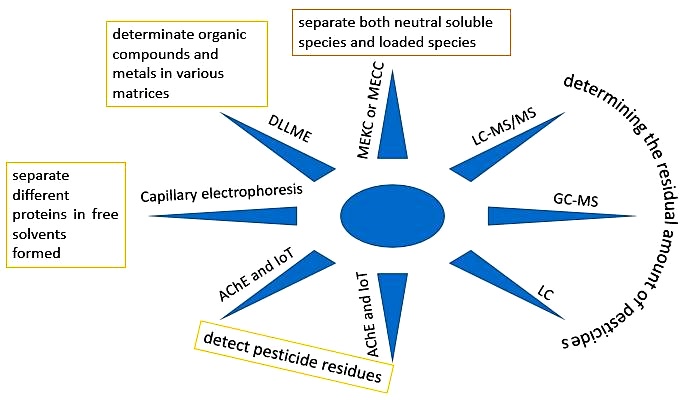
Abstract In recent years, environmental concerns and food safety in developing countries are the most important issues. Pesticides are vastly utilized in farming to improve crop production and quality and to reduce energy costs. These pesticides are biodegradable chemical compounds that are generally applied in farming to control pests and promote agricultural production. However, their excessive use, even in low concentrations, may cause serious health problems and environmental pollution. Therefore, a great deal of the research has focused on methods used for determining the presence of pesticides in various food matrices, according to this proposing sensitive diagnostic methods is essential for reliable quantification of pesticides availability. Meanwhile, rapid detection technologies which are among the most important tools in the analysis of food products are required to be assessed for analysis of residual persistence of pesticides in food and agricultural products to effectively control their quality and safety. In this article, it is attempted to provide a complete review of some detection methods including HPLC, HPTLC, GC/ MS/ MS, CE-DAD, LPME, SPME, LLE, DLLME, AChE, SERS, LC/ Tandem/ MS/ MS, MSPD, luminescence chemistry, safety assessment, and Meisel chromatography electrosynthesis used to identify pesticide residues in different food samples.

Keywords Cloud